Wakayama · Japan
Wakayama City
The prefectural capital, and the closest of these five places to Kansai Airport — a castle, a hillside pilgrimage temple, a tuna market on an artificial island and a doll-filled shrine on the coast, with a National Treasure pagoda half an hour inland.
A capital built around one castle
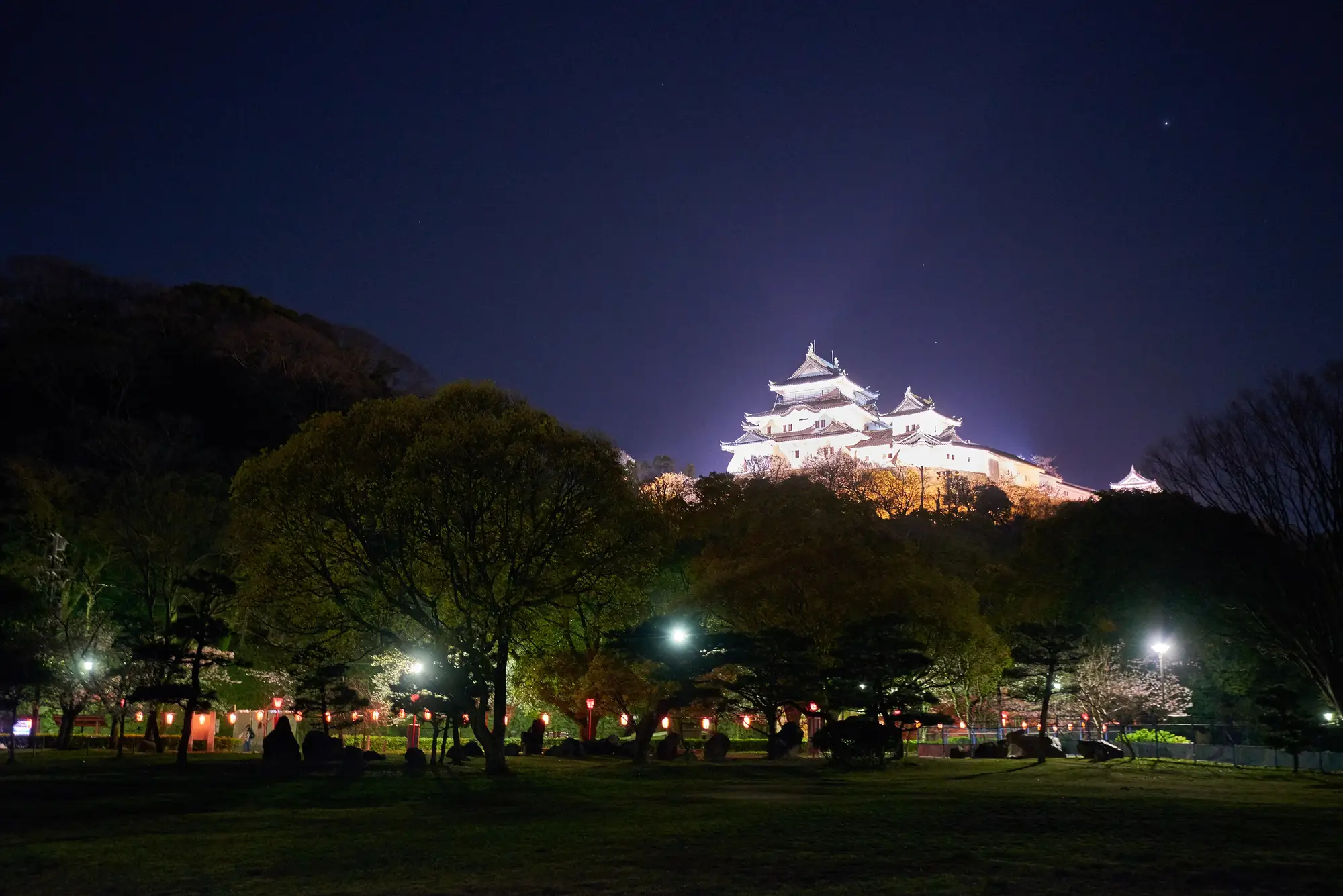
Wakayama Castle began in 1585, when Toyotomi Hideyoshi had his younger brother Hidenaga build a castle on Torafusu-yama, a small hill near the mouth of the Kinokawa River. In 1619 Tokugawa Yorinobu, the tenth son of Tokugawa Ieyasu, moved in, and for the rest of the Edo period Wakayama Castle was the seat of the Kishu Tokugawa, whose domain was rated at 555,000 koku. The eighth shogun, Tokugawa Yoshimune, came from this branch of the family.
The keep you see today is not original. Wakayama Castle's keep burned after a lightning strike in 1846, was rebuilt in 1850, was designated a National Treasure in 1935, and was destroyed in the air raid of 9 July 1945. The current keep is a 1958 reinforced-concrete reconstruction of the prewar exterior, with exhibits inside and a view over the city to the sea. A few older structures survived the bombing: the Okaguchi Gate, built in 1621, is an Important Cultural Property.
Wakayama Castle's grounds are free to walk, and the small zoo inside them is free too. The Nishinomaru Garden, also called Momijidani ("maple valley"), is an early-Edo daimyo garden and a national Place of Scenic Beauty, at its best when the maples turn in late November. The Ohashi Roka, a roofed corridor bridge that slopes across the moat, was rebuilt in 2006 from Edo-period plans. Three slopes lead up to the keep: Omotezaka (300m, 70 steps), Urazaka (225m, 79 steps) and the steep Shin-urazaka (130m, 102 steps). Allow about 15 minutes on foot from the Ichi-no-hashi bridge to the keep.
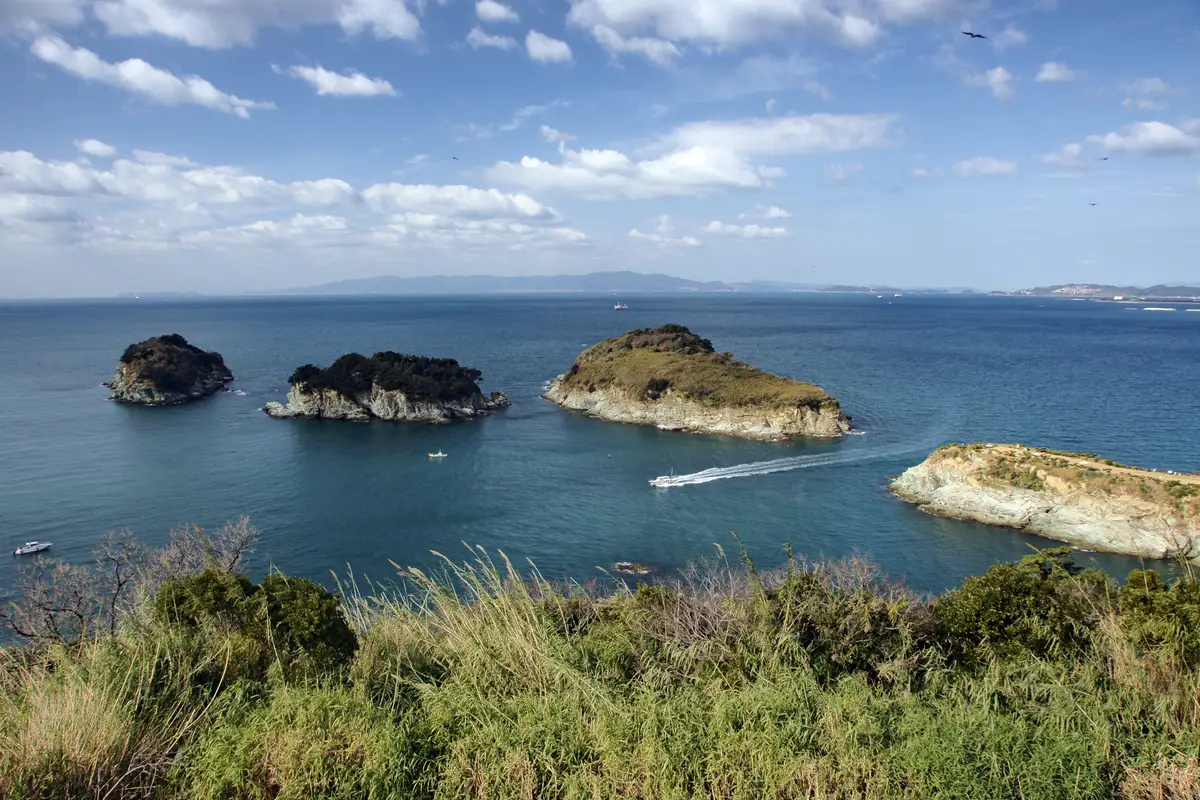
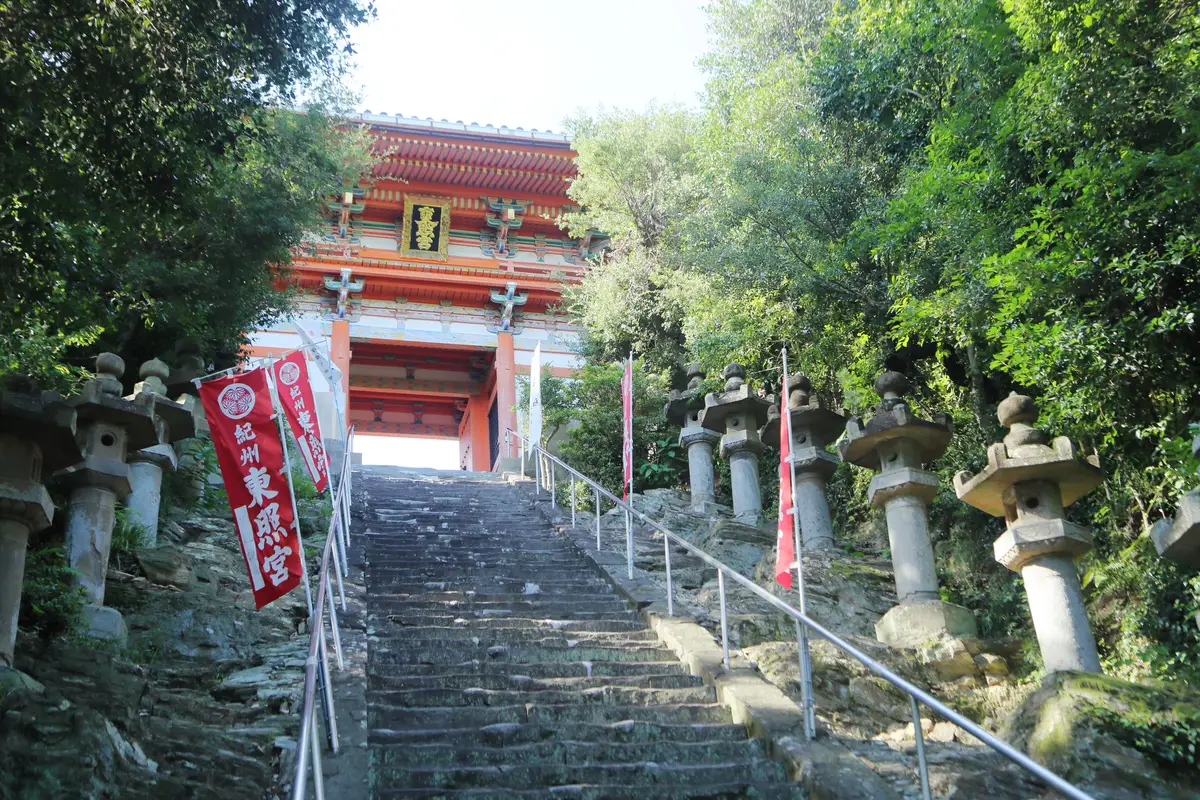
The other half of the city is the coast to the south. Wakanoura, a bay praised in poetry since the 8th century, is a Japan Heritage site, and Kishu Toshogu, the shrine Yorinobu founded in 1621 for his father Ieyasu, stands above it at the top of a steep stone stairway (¥300, 9:00–16:30). Kimiidera faces the same bay from the hillside opposite, and the islets off Saikazaki are a short drive further along the shore.
Five sights, compared
Four of the five are inside Wakayama City and reachable from JR Wakayama Station or Nankai Wakayamashi Station; Negoroji is in Iwade City to the east. Hours and show times change, so confirm on each official site before you go.
| Sight | Highlight | Cost | Access |
|---|---|---|---|
| Wakayama Castle | Reconstructed 1958 keep, moats, the Nishinomaru maple garden and several hundred cherry trees, lit up in the evenings during the Sakura Festival (20 March to the second Sunday of April). | ¥410 adult (keep); grounds free | About 10 min by bus from JR Wakayama Station to Wakayama-jo-mae, or a 15-min walk from Wakayamashi Station |
| Kimiidera | 231 stone steps to a hilltop temple overlooking Wakanoura; about 500 cherry trees, including the local weather observatory's benchmark tree, and a 12m gilded Kannon. | Free on foot; ¥400 temple fee plus ¥200 each way by cable car | 10-min walk from JR Kimiidera Station, two stops from Wakayama |
| Negoroji | The Daito (National Treasure, completed 1547, 37m), Japan's largest wooden daito pagoda, which survived Hideyoshi's 1585 attack; about 7,000 cherry trees, one of Japan's 100 best cherry blossom spots. | ¥500 adult | In Iwade City: bus or 10-min taxi from JR Iwade Station |
| Marina City | Kuroshio Ichiba tuna market, with a tuna-cutting show (12:30 daily, plus 11:00 and 15:00 on weekends and holidays at the time of writing), and the Porto Europa theme park next door. | Market free; Porto Europa entry free, ride pass ¥4,800 | Wakayama Bus from JR Wakayama or Wakayamashi Station |
| Awashima Shrine | Roughly 20,000 dolls left in the shrine's care; the Hina-nagashi doll-boat ceremony starts at noon every 3 March. | Free | 20-min walk from Nankai Kada Station |
Before you go
Pick two or three sights, not all five. Wakayama Castle and Kimiidera pair well in a half day, and Marina City sits just south of Kimiidera if you want the tuna show as a lunch stop. Awashima Shrine and Tomogashima share the same small port at Kada and together fill most of a day. Negoroji is in the opposite direction, inland in Iwade City, and needs its own half day.
Negoroji's buses are the weak link. The Iwade City loop bus from JR Iwade Station runs only a handful of times a day, so check the timetable on the temple's access page or plan on a taxi from Iwade Station, which takes about 10 minutes.
For cherry blossoms, Kimiidera usually opens first: the Wakayama weather observatory's benchmark tree stands in front of its main hall, and the grounds are usually at their best from late March into early April. Wakayama Castle and Negoroji bloom over the same weeks. See our best time to visit guide for the rest of the year.
In autumn, the maples in Wakayama Castle's Nishinomaru Garden turn in late November, and Negoroji's maple valley is another good spot for autumn colour.
Wakayama Castle's keep is closed from 29 to 31 December and occasionally for maintenance (it is closed on 9 December 2026). On 1 January it opens free from 6:00 to 9:00 so people can watch the first sunrise of the year.
Between June and August, Arakawa peach picking in nearby Kinokawa is an easy add-on if you have a car.
For lunch or a late meal, Wakayama City is the home of Wakayama ramen, the pork-bone and soy sauce chuka soba eaten with mackerel sushi from the table; two of the best-known shops are within walking distance of JR Wakayama Station.
Hours and fees at a glance
Most sights here close by late afternoon, so start early if you want to fit in three.
| Sight | Hours | Admission (adult) |
|---|---|---|
| Wakayama Castle keep | 9:00–17:30 (last entry 17:00); closed 29–31 Dec | ¥410 (children ¥200) |
| Kimiidera | 8:00–17:00; cable car 8:30–16:30 | Free on foot; ¥400 + ¥200 each way by cable car |
| Negoroji | 9:10–16:30 (Apr–Oct); 9:10–16:00 (Nov–Mar) | ¥500 (children free) |
| Kuroshio Ichiba (Marina City) | Usually 10:00–17:00 or 18:00, varies by season | Free entry |
| Awashima Shrine | 9:00–17:00 | Free |
| Kishu Toshogu | 9:00–16:30 | ¥300 |
Getting to Wakayama City
From Kansai Airport, the airport limousine bus to JR Wakayama Station takes about 40 minutes. By train, take Nankai from Kansai-Airport Station, change at Izumisano and ride to Wakayamashi Station (about 45 minutes), or take the JR Kansai Airport Line and change at Hineno to the JR Hanwa Line for Wakayama Station.
From Osaka, the Nankai Main Line (including the Southern limited express) runs from Namba to Wakayamashi Station in about an hour. From Shin-Osaka, the JR Kuroshio limited express reaches Wakayama Station in about an hour.
Wakayama City has two main stations. JR Wakayama Station is the one for Kimiidera (JR Kisei Line) and for Negoroji (JR Wakayama Line to Iwade). Nankai Wakayamashi Station is the one for Awashima Shrine and Tomogashima (Nankai Kada Line). Wakayama Castle sits between them: about 10 minutes by bus from JR Wakayama Station to the Wakayama-jo-mae stop, or a 15-minute walk from Wakayamashi Station.
Primary sources
- Wakayama Castle — official site (hours, fees, history)
- Wakayama Castle — facilities and history
- Wakayama Castle — access
- Saigoku 33 Kannon Pilgrimage — Kimiidera (Temple 2)
- Negoroji — official visitor information
- Kuroshio Ichiba — tuna-cutting show
- Porto Europa — tickets
- Wakayama Prefecture official tourism — Kishu Toshogu
Last updated: