Wakayama · Japan
Negoroji
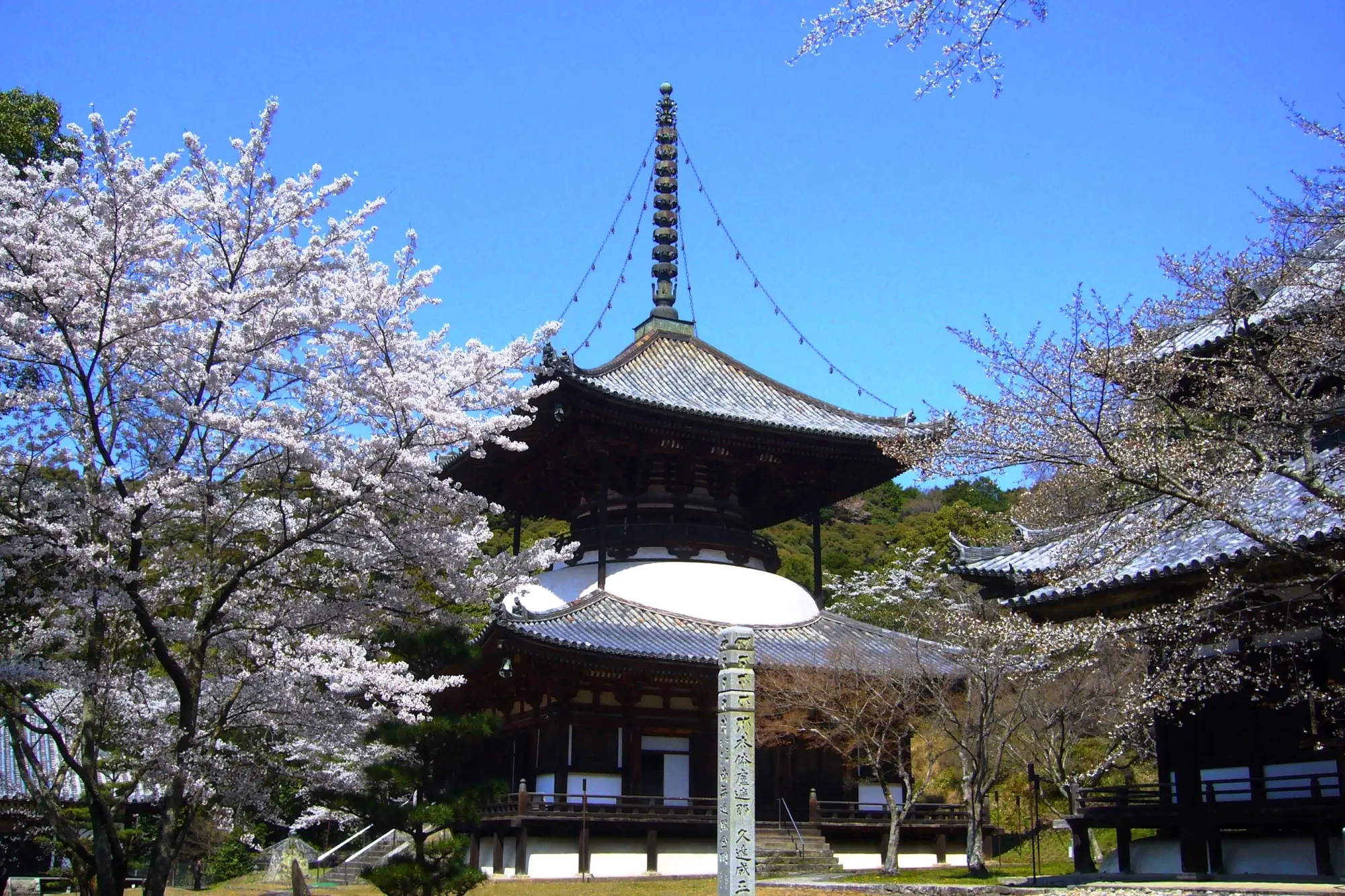
Once the stronghold of warrior-monks who were among the first in Japan to make and use guns, Negoroji is now a quiet temple complex known for Japan's largest wooden daito pagoda and about 7,000 cherry trees, one of Japan's 100 best cherry blossom spots.
From private army to National Treasure
Kakuban, born in 1095 in what is now Saga Prefecture, was a Shingon scholar-monk who set out to revive esoteric Buddhism on Koyasan. With the backing of the retired Emperor Toba he founded the Daidenpoin there in 1132, then left the mountain in 1140 amid hostility from other Koyasan monks and settled at Negoro, where he died in 1143. Around 1288 the monk Raiyu moved Daidenpoin's centre of learning to Negoro, and the "new" (shingi) Shingon teaching developed there is the root of the Shingi Shingon school today. Negoroji is also where Kakuban is buried, in a mausoleum at the back of the precinct.
By the 1500s Negoroji was less a temple than a fortified town. The temple's English history counts about 270 sub-temples in the late Muromachi period, while an old map of the precinct shows 300 to 400 cloisters, and the Jesuit missionary Luis Frois wrote about Negoro in his history of Japan. Its fighting monks, the Negoro-shu, became known for guns: according to Iwade City, Tsuda Kenmotsu of Negoroji travelled to Tanegashima soon after Portuguese traders brought firearms there in 1543, learned how to make guns and gunpowder, and had the first matchlocks on Honshu made at Negoro. Negoro gunners became a force regional warlords could not ignore.
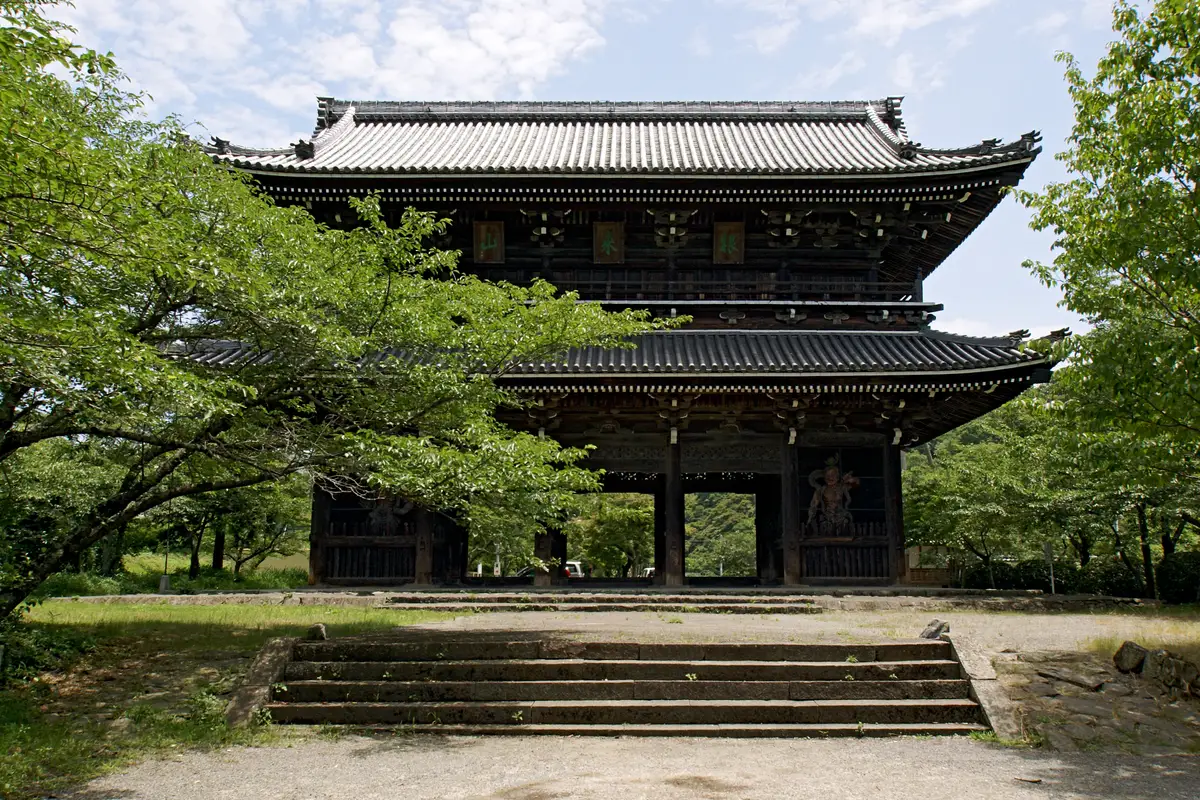
That power made Negoroji a target. In March 1585 Hideyoshi invaded Kii Province with an army Iwade City puts at 100,000, and all but two or three of Negoroji's halls burned. Among the survivors were the Daito and the Daishido, built around 1391. Rebuilding was not allowed until Tokugawa Ieyasu gave permission in 1600, and most of what stands today was rebuilt under the protection of the Kishu Tokugawa lords, including the main hall, the Daidenpodo (1827), and the great gate, the Daimon (1852), which is almost 17 metres tall.
The Daito is the reason most people come. Negoroji's Daito is a two-storey pagoda with a square lower storey and a round upper one, built as a faithful copy of the great pagoda Kakuban raised on Koyasan. It was completed in 1547, stands 37 metres high and 15 metres wide, and was designated a National Treasure in 1952. Unusually, you can go inside: the temple says it is the only National Treasure building in Japan that visitors can enter every day.
Where to stay nearby
Negoroji has no lodging of its own. Wakayama City, about 30 minutes away by car, is the practical base.
| Hotel | From (per night) | What makes it different | Book |
|---|---|---|---|
| Hotel Granvia Wakayama | $55 | Directly connected to JR Wakayama Station, where JR Wakayama Line trains leave for Iwade — a practical base for combining Negoroji with Kimiidera or the castle. | Booking.com → |
| Daiwa Roynet Hotel Wakayama | $53 | A reliable mid-range business hotel a short walk from the station. | Booking.com → |
| Candeo Hotels Nankai Wakayama | $77 | Higher-end option near Wakayamashi Station, on the Nankai line side of the city. | Booking.com → |
Before you go
Autumn is the other good season. The Momiji-dani (maple valley) near the Okunoin turns red in autumn, and the temple's grounds hold a lotus pond that blooms in early summer.
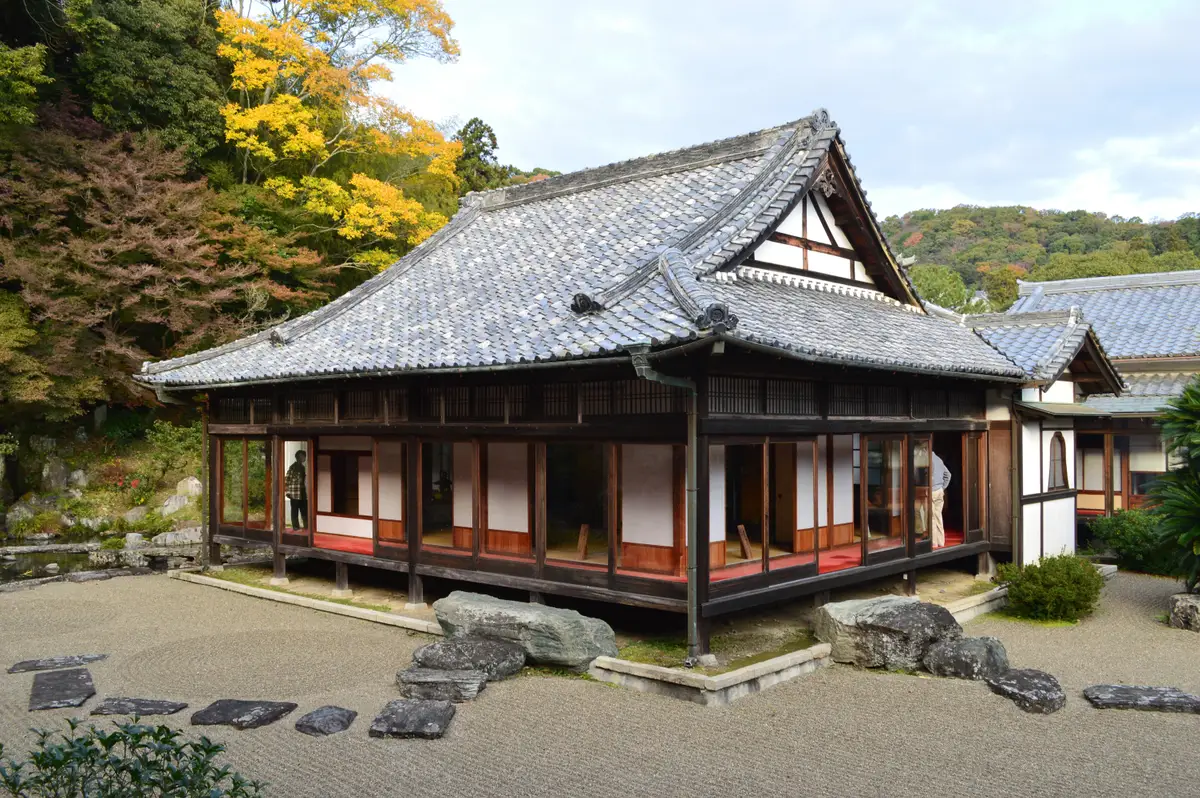
Construction note: the Honbo, the head priest's residence at the centre of the precinct, was demolished in 2025 and a new building is under construction through 2026. While the work continues, the entrance to the Komyoden, Gyojado and Shotendo halls is from the general reception in front of the Komyoden, and the Edo-period garden, a national Place of Scenic Beauty, can be viewed only from the Komyoden's veranda. Check the temple's news page for changes.
Look for the vermilion altar in the Shotendo, the hall standing over a pond: it is lacquered in Negoro-nuri, the red-over-black lacquerware named after this temple. The octagonal Fudodo holds the "Kirimomi Fudo," a statue said to have taken the place of Kakuban when a mob attacked him on Koyasan.
Negoroji is not on a railway, and buses are infrequent. The simplest approach is from JR Iwade Station on the JR Wakayama Line: the Iwade City loop bus (¥150) stops at Negoroji, but it runs only a handful of times a day. A taxi from Iwade Station takes about 10 minutes, and there is free parking at the temple.
There is no lodging at Negoroji. Most visitors stay in Wakayama City and treat this as a half-day trip. Kimiidera is on the opposite side of Wakayama City, so pairing the two in one day takes some planning. From June to August, Arakawa peach picking in neighbouring Kinokawa is close by if you have a car.
Visiting: hours and admission
One ticket covers the main precinct, including the inside of the Daito.
| Item | Details |
|---|---|
| Hours, April to October | 9:10–16:30 |
| Hours, November to March | 9:10–16:00 |
| Admission | Adults (junior high and up) ¥500; children free |
| Groups of 30 or more | ¥400 per adult |
| Time needed | About 1 hour for the central area; about 2 hours for the whole precinct |
| Late October | The Daishido, Daito and Daidenpodo may be closed for a ceremony; call 0736-62-1144 |
Getting to Negoroji
From JR Wakayama Station, take the JR Wakayama Line to Iwade Station, then the Iwade City loop bus to the Negoroji stop (¥150, only a few buses a day) or a taxi (about 10 minutes).
From Osaka or Kansai Airport you can also approach from the north: take the JR Hanwa Line to Izumi-Sunagawa Station, or the Nankai Main Line to Tarui Station, then a Wakayama Bus Naga bus toward Iwade. Buses routed via Kindai University stop at Negoroji; others stop at Iwade Toshokan, about a 10-minute walk from the temple. Check the timetable on the temple's access page first.
A taxi from Kansai Airport takes about 30 minutes and costs around ¥8,000. By car, Negoroji is about 30 minutes from Wakayama City or Kansai Airport, using the Hanwa Expressway (Sennan IC) or the Keinawa Expressway (Iwade-Negoro IC).