Wakayama · Japan
Shirahama
A white-sand beach town built around one of Japan's three oldest hot springs. It now draws more foreign overnight guests than anywhere else in Wakayama.
Beach by day, onsen by night
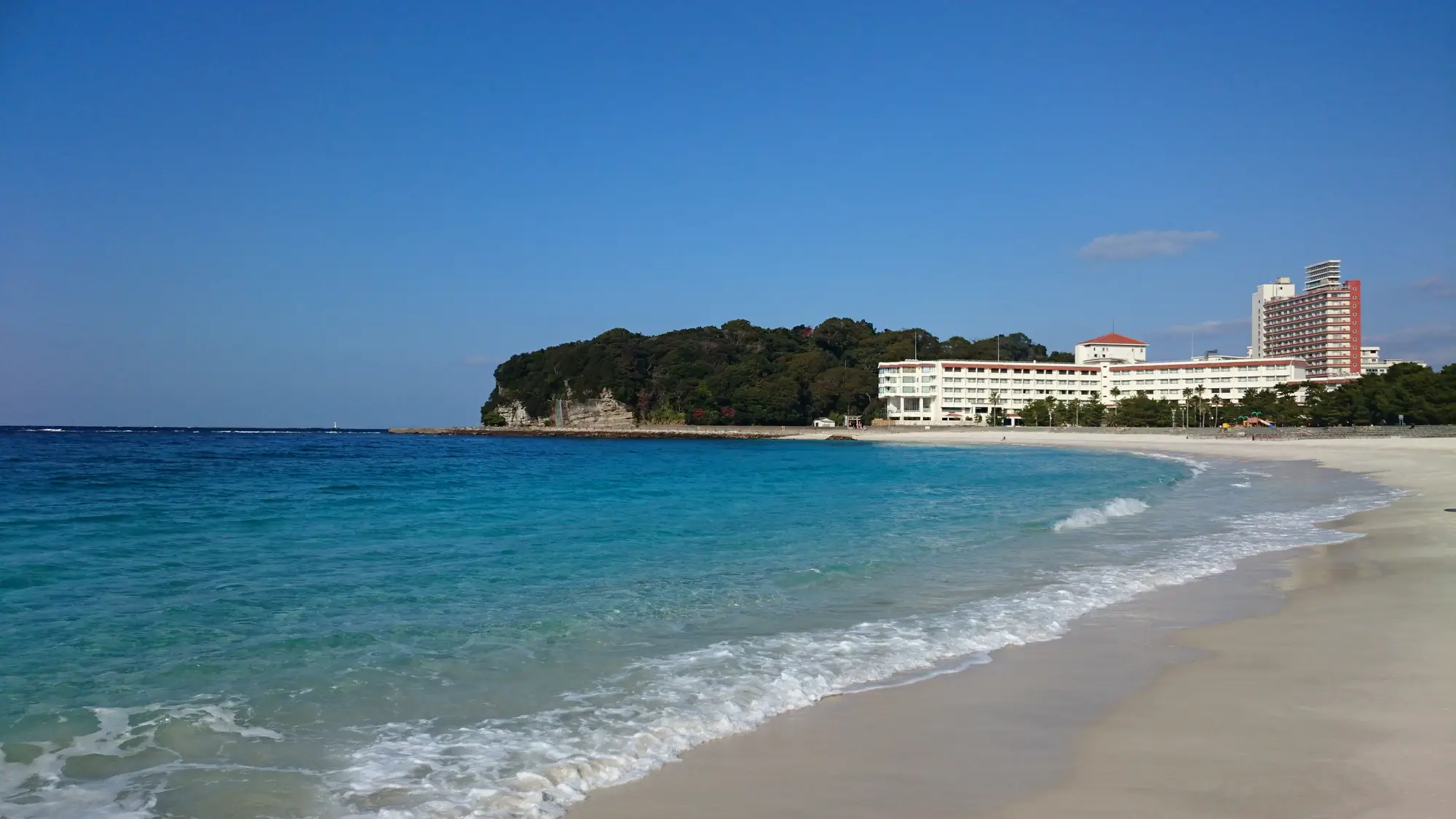
Shirarahama Beach has an unusual history. The beach had been losing sand for decades, and no sand white enough to match the original could be found nearby, so from 1989 Wakayama Prefecture began topping it up with sand shipped from the Perth area of Western Australia: about 74,500 cubic metres had been added by 2005. The result is a beach that stays bright white rather than the grey-brown sand typical of Japan's Pacific coast. The beach traditionally opens for swimming on 3 May, billed as the earliest beach opening on Honshu, and lifeguarded swimming usually continues into mid-September; check the Nanki-Shirahama Tourism Association for the current year's dates.
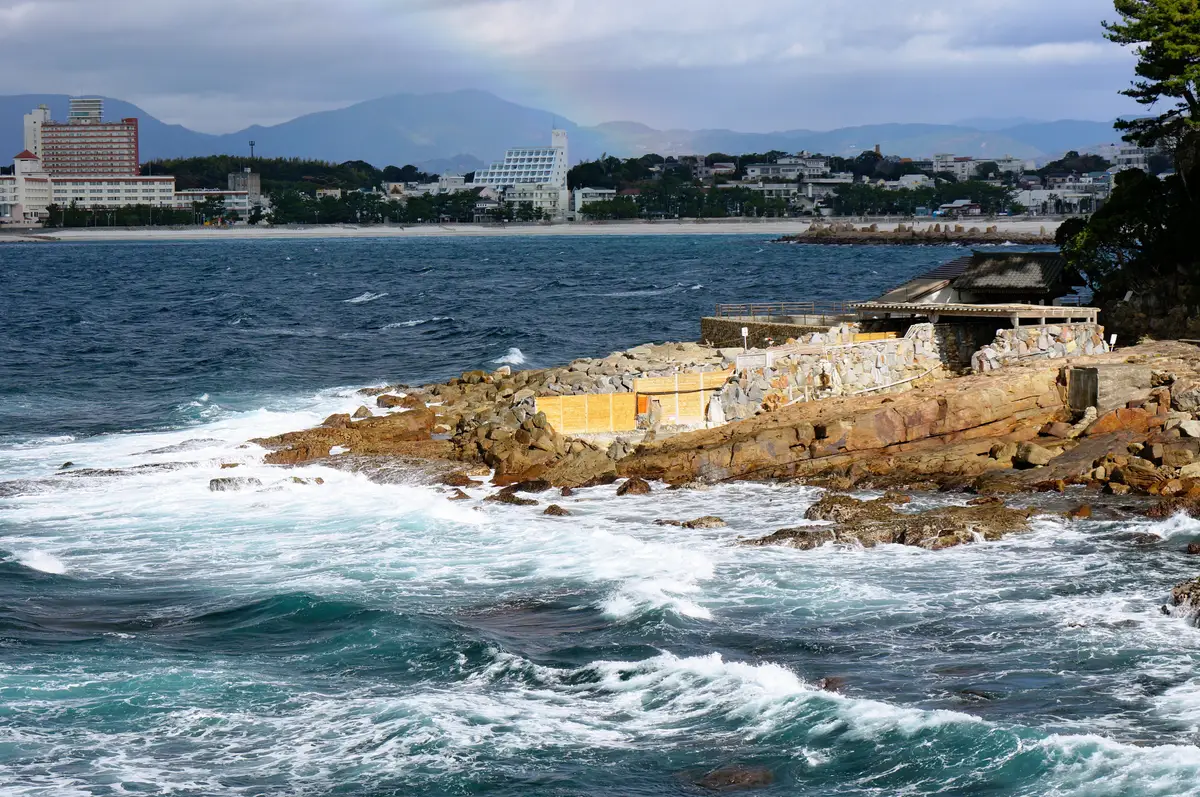
The onsen is the older attraction. Sakinoyu, a public open-air bath set into the seaside rocks of the Yuzaki headland south of the beach, is the spring that emperors and empresses of the 7th and early 8th centuries travelled to, and waves break right beside the pools. It costs ¥500, opens from 8:00 (7:00 in July and August) and closes between 17:00 and 19:00 depending on the season. Soap and shampoo are not allowed because the water drains straight into the sea, so treat it as a soak, not a wash. If you want to wash properly, Muronoyu is an ordinary indoor municipal bathhouse (¥420 adults, closed Tuesdays).
Most visitors split a stay between the beach in daylight and the town's onsen in the evening. Many hotels have their own hot-spring baths, so you may not need a public bath at all, but Sakinoyu is worth a visit for its setting alone. In winter the beach gets a second life after dark: in recent seasons the Shirarahama Light Parade has lit the full 620 metres with light and music from about 17:00 to 22:00, roughly from late autumn to March.
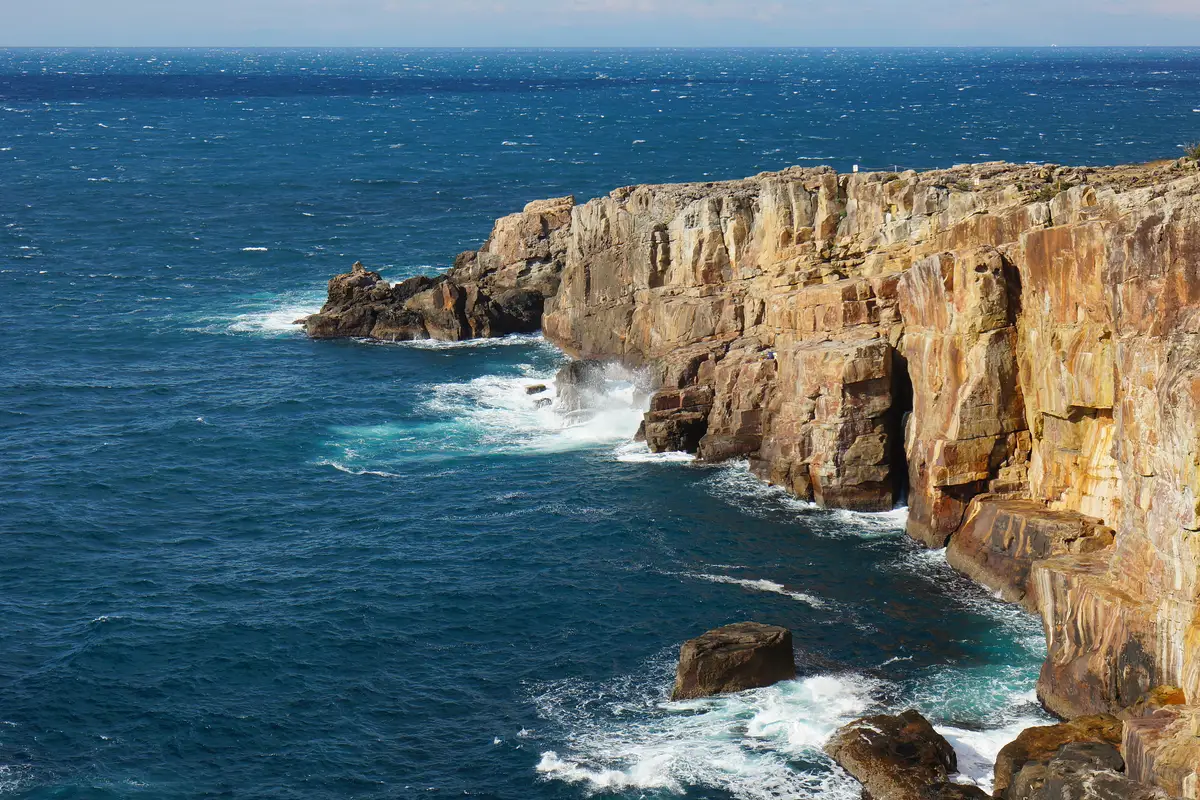
Beyond the beach, Shirahama's sights run along a short stretch of coast. Engetsuto, the island with a hole through it, sits at the northern end near the Kyoto University aquarium. To the south, Senjojiki is a free-to-walk sandstone shelf of about 4 hectares shaped by waves, and a little further on, the 40–50 metre Sandanbeki cliffs hide a sea cave reached by an elevator 36 metres down. The Sandanbeki cave is the one paid sight in this group (¥1,500), and it is worth it mostly on a day with a big swell, when the waves boom through the cave.
Where to stay, compared
Unlike Koyasan's temple lodgings, Shirahama's hotels are almost all listed on the usual booking sites, which makes this one of the more straightforward places on this site to actually book.
| Hotel | From (per night) | What makes it different | Book |
|---|---|---|---|
| Nanki-Shirahama Marriott Hotel | $59 | International brand at the lowest listed rate in this table, with an outdoor pool and Shirahama Onsen baths including a top-floor open-air bath. About 10 minutes by car from JR Shirahama Station. | Marriott → |
| Kisyu Shirahama Onsen Musashi | $128 | A large Japanese-style inn about a minute's walk from Shirarahama Beach, with two hot-spring sources and six kinds of baths, including an open-air bath. | Booking.com → |
| Shirahama Key Terrace Hotel Seamore | — | A 30-metre infinity foot bath facing the Pacific (free, 7:00–23:00), and its own undersea observation tower, Coral Princess, 100 metres offshore. | Booking.com → |
| Hotel Kawakyu | $304 | The area's luxury option: every room is a suite, there is an indoor pool and hot-spring spa, and the lobby has a gold-leaf ceiling. About 10 minutes by car from JR Shirahama Station. | Booking.com → |
Before you book
Book well ahead for Japanese Golden Week (late April to early May), the Obon holiday (mid-August) and the two summer fireworks nights over Shirarahama Beach (traditionally 30 July and 10 August), when flights and hotels sell out fastest.
If a hot-spring bath matters more to you than beach proximity, check whether a hotel's bath uses natural Shirahama Onsen water rather than a heated pool. Most Shirahama properties say so clearly, but not all do.
For the sunset, go to Engetsuto. On most evenings the sun drops beside the island, and for about five days either side of the spring and autumn equinoxes it sets inside the arch.
Travelling in October? Warai Matsuri, a genuinely rural "laughing festival" in Hidakagawa, happens up the line near Gobo on the Sunday before Japan's Sports Day holiday. It is a possible day trip if you have one to spare.
Between late October and early December, mikan picking in Arida sits on the coast road between Wakayama City and Shirahama, an easy stop if you are driving.
Just up the coast, Minabe's plum groves bloom from late January to early March, peaking around mid-February. They are part of a UN-recognized agricultural heritage system, a short train ride north.
Shirahama's main sights: hours and fees
Most of Shirahama's coast is free to walk. You pay for the bath, the cave, the aquarium, the undersea tower and Adventure World.
| Sight | Cost | Hours | Allow |
|---|---|---|---|
| Shirarahama Beach | Free | Always open; lifeguarded swimming season usually early May to mid-September | As long as you like |
| Sakinoyu open-air bath | ¥500 (age 3+) | 8:00–17:00 Oct–Mar; 8:00–18:00 Apr–Jun & Sep; 7:00–19:00 Jul–Aug (last entry 30 min before) | 30–45 min |
| Engetsuto | Free | Viewpoint always open; best 20–30 min before sunset | 15–30 min |
| Senjojiki rock shelf | Free | Always open (take care on wet rock) | 20–30 min |
| Sandanbeki cave | ¥1,500 adults / ¥750 children | 8:00–17:00 (last entry 16:50) | 30–45 min |
| Kyoto University Shirahama Aquarium | ¥600 adults / ¥200 children (cash only) | 9:00–17:00 (last entry 16:30), open daily | About 1 hour |
| Shirahama Undersea Observation Tower (Coral Princess) | ¥800 adults / ¥500 children | 9:00–16:30 (last entry 16:00) | 20–30 min |
| Adventure World | ¥5,300 adults (1-day) | Usually 10:00–17:00; closed on some days | Half to full day |
Getting to Shirahama
From Osaka, take the JR Kuroshio limited express from Shin-Osaka or Tennoji directly to Shirahama Station: about 2.5 hours from Shin-Osaka and a little over 2 hours from Tennoji, with no transfers.
Shirahama Station is inland, not in the resort itself. Meiko Bus services take about 15 minutes to Shirarahama Beach (¥340), about 16 minutes to the Rinkai stop for Engetsuto, and about 25 minutes to Sandanbeki. A taxi to the hotel area takes about 10 minutes.
From Tokyo, fly Haneda to Nanki-Shirahama Airport (about 75 minutes, JAL). Meiko route buses from the airport run to the Shirahama bus centre and hotel area in roughly 30 minutes; they are ordinary local buses, not airport limousines, and not frequent, so a taxi is often simpler.
Once in town, Meiko buses serve the beach, Sakinoyu, Senjojiki, Sandanbeki, Engetsuto and Adventure World, so you can see Shirahama without a car if you check the timetable before heading out.
Primary sources
- Japan National Tourism Organization — Shirahama
- Wakayama Shimpo — 2025 foreign guest nights by municipality (Wakayama Prefecture survey)
- Wakayama Prefecture tourism statistics database
- Shirahama Town — Sakinoyu (history, hours, fees)
- Shirahama Town — Muronoyu
- Wakayama Prefecture cultural properties — Engetsuto, Senjojiki and Sandanbeki (National Scenic Spot)
- Sandanbeki Cave — official site
- Kyoto University Shirahama Aquarium — hours and admission
- Nanki-Shirahama Tourism Association — Shirarahama Light Parade
- Kumano Shirahama Resort Airport — bus access
Last updated: