Wakayama · Japan
Arida Mikan Picking
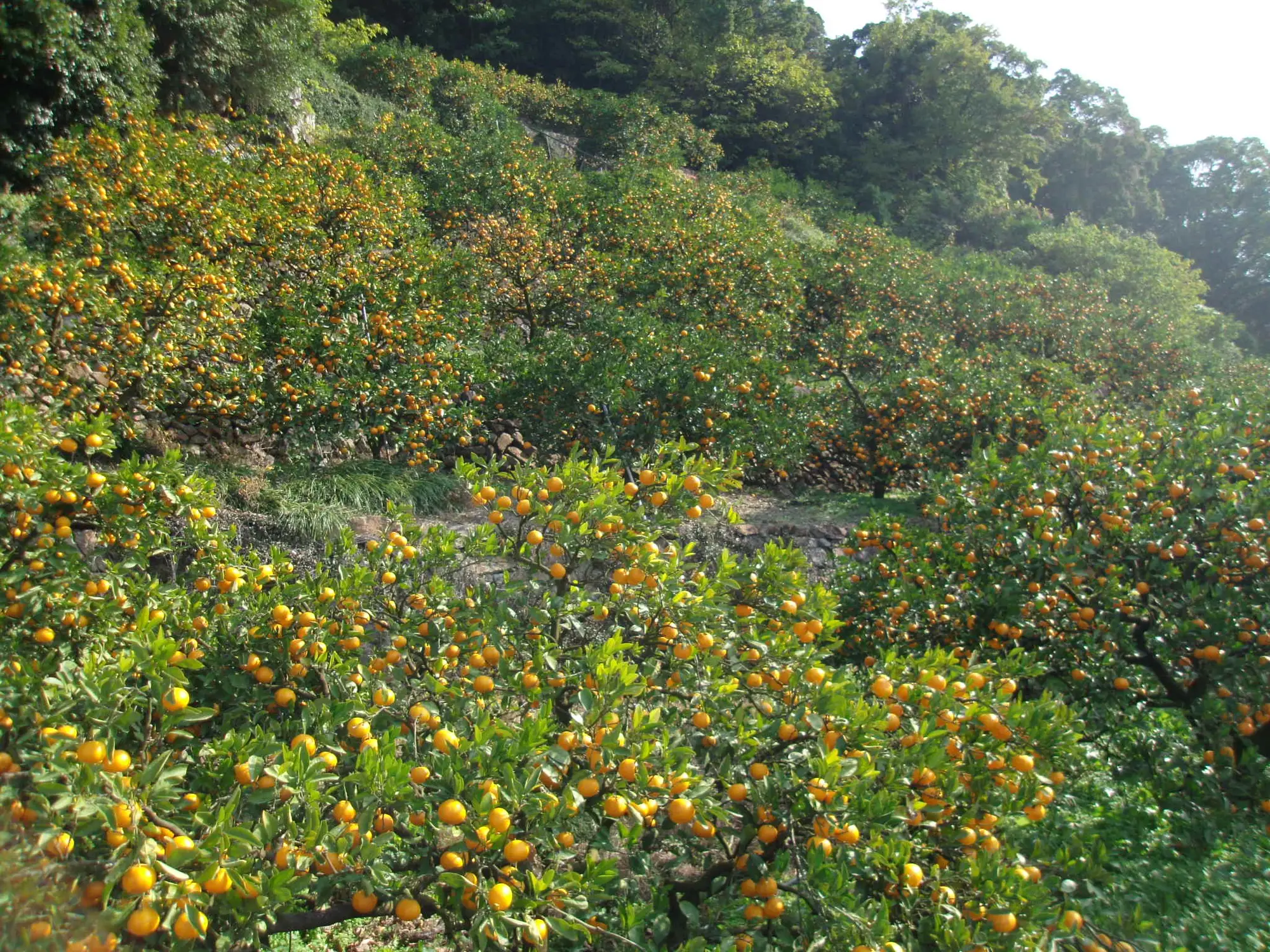
Arida's mandarin orange terraces are more than a pick-your-own stop. Farmers have been building and working these stone-walled slopes for over 400 years, and in 2025 the UN's Food and Agriculture Organization recognized them as a World Agricultural Heritage system.
A farming system old enough to be a heritage listing
Mikan growing in Arida is usually dated to 1574, when a local grower, Ito Magoemon, is said to have brought small mikan saplings back from Yatsushiro in Higo Province (today's Kumamoto). By 1634 Arida growers were shipping mikan to Edo (Tokyo): the first recorded cargo was 400 baskets, and by the early 18th century shipments reached hundreds of thousands of baskets a year. The legend of the merchant Kinokuniya Bunzaemon, who is said to have run a storm to carry Kishu mikan to Edo in a single daring voyage, grew out of this trade.
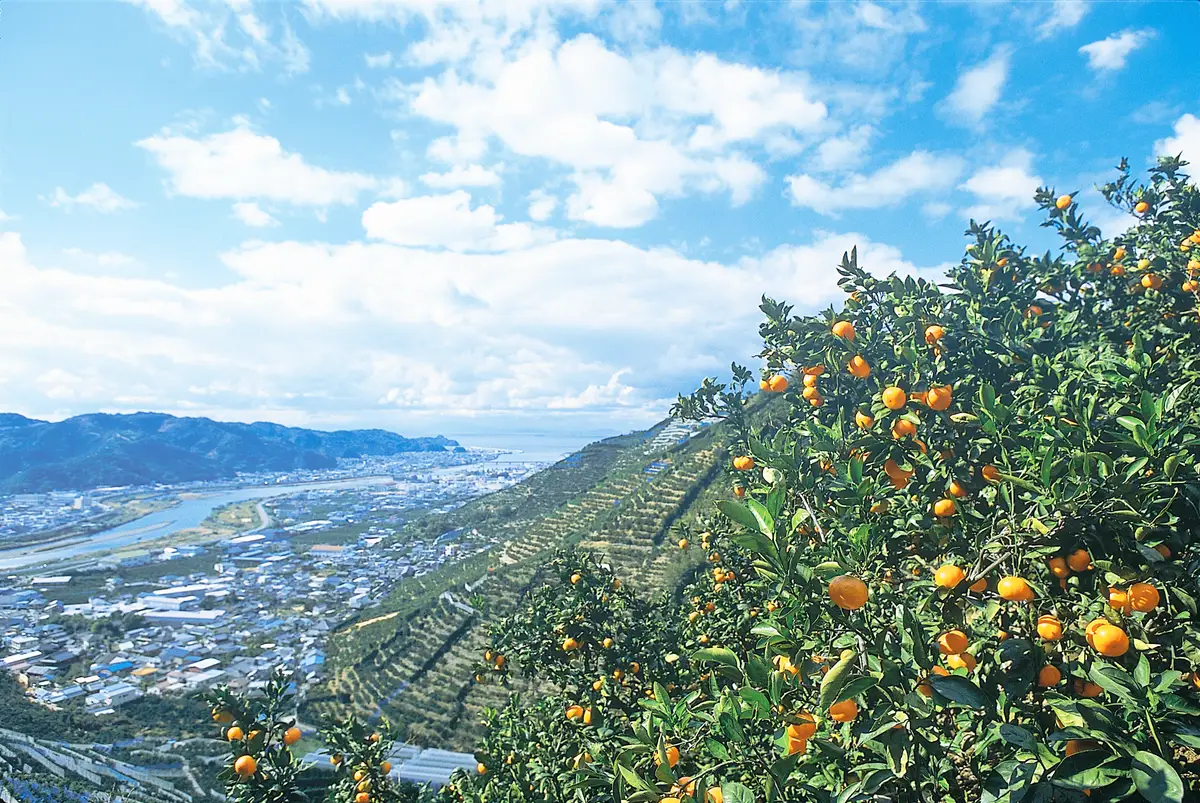
The Arida and Shimotsu farmers built their orchards on steep hillsides using stacked-stone retaining walls, creating terraces on slopes too steep for ordinary farming. The Arida-Shimotsu GIAHS area takes in Arida City, Yuasa, Hirogawa and Aridagawa towns, and the Shimotsu district of Kainan City. Each slope's sunlight, temperature and soil decide which varieties are planted there, and seedlings are raised locally.
The second half of the system is storage. In Shimotsu, harvested fruit is kept in earth-walled storehouses built among the orchards, where it mellows and sweetens before being sold as "kuradashi" (out-of-the-storehouse) mikan in the new year. Fresh Arida mikan before New Year, then stored Shimotsu mikan after it: that relay is what the FAO recognized in August 2025. GIAHS is an FAO programme, separate from UNESCO World Heritage; there were 102 sites worldwide at the time, 17 of them in Japan.
For a visitor, this means the orchards you walk through are working farmland, not a theme park. The terraces climb straight out of the Arida River valley, and in late autumn the slopes turn orange with fruit.
The numbers explain why Arida matters. In 2024 Japan's national mikan crop fell 18% to 559,600 tonnes, yet Wakayama still harvested 141,700 tonnes and kept first place for the 21st year running. Wakayama is also Japan's top grower of persimmons and hassaku; see About Wakayama for the full list.
Where to pick
Sugai Farm, on the hillside above Kii-Miyahara in Arida City, runs a guided picking experience. You pick, you eat, and a grower explains the history and how to choose a good mikan.
| Farm | Season | Price | Book |
|---|---|---|---|
| Sugai Farm (Arida City) | Late October – early December, 10:00–16:00 | ¥3,500 (about $23) | Booking page → |
Before you go
The experience includes a guide explaining Arida mikan history, why the fruit tastes the way it does, and how to pick the best ones. This is not a bare-bones pick-and-pay stop. The booking listing is in Japanese, so if you need English, ask when you reserve.
You need to be able to walk on sloped, uneven ground. The orchards are working hillside farms, not a flat, paved facility. Wear shoes with grip, and expect the terraces to be muddy after rain.
Timing matters more than the calendar suggests. Sugai Farm's season is late October to early December, but Arida's harvest overall runs longer: early varieties start around September, and stored mikan are shipped well into the new year. The orchards are also worth seeing in May, when the trees flower and the valley smells of citrus blossom, although there is nothing to pick then.
Reservations close five days ahead, so this is not something to decide on the morning. If you are travelling in a group, the farm takes up to 35 people.
Just up the coast, Yuasa, the traditional birthplace of Japanese soy sauce, makes an easy pairing: Yuasa Station is only a few stops south of Kii-Miyahara on the same line. In February and March, Minabe's plum orchards, another GIAHS-listed landscape, are less than an hour further south by car. For how Arida fits a wider trip, see Best Time to Visit.
Arida mikan through the year
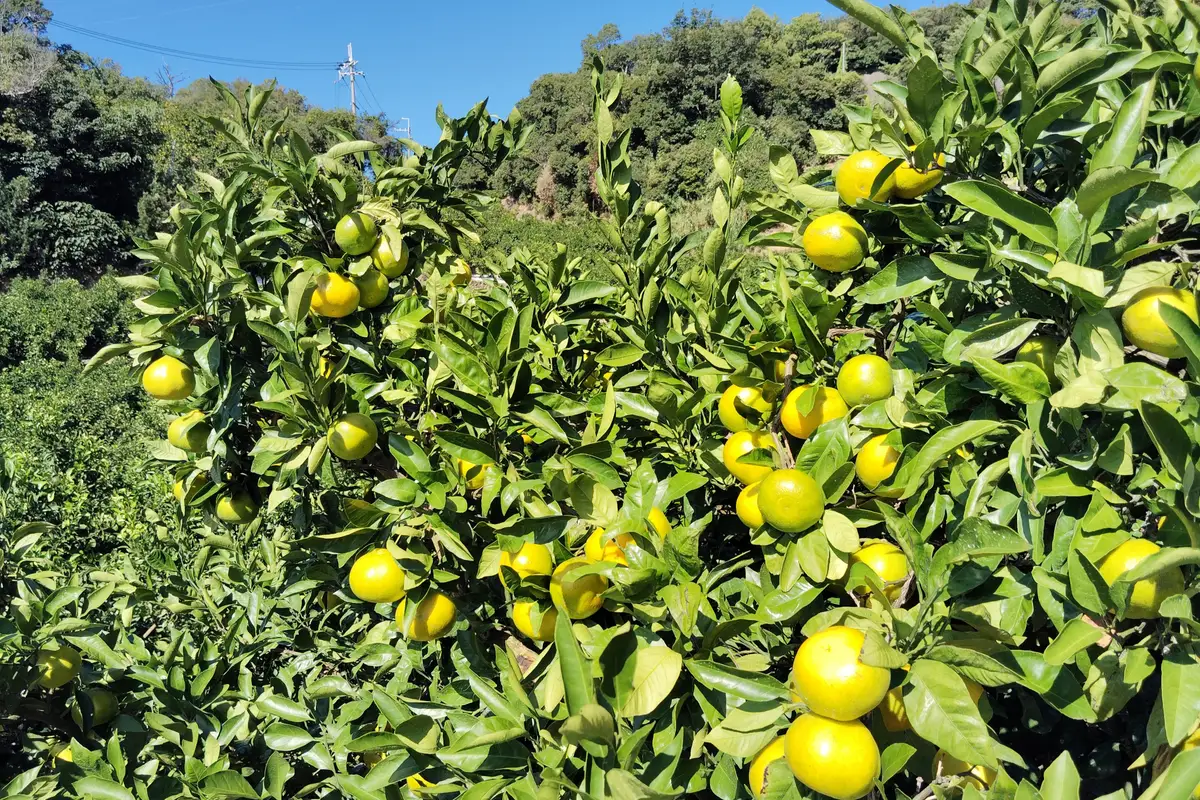
The picking window is short, but the orchards have something to show for most of the year.
| When | What happens | Good for visitors? |
|---|---|---|
| May | Mikan trees flower across the terraces | Scenery and scent only |
| Around September – December | Harvest of Arida mikan, early to late varieties | Yes: picking season at Sugai Farm is late Oct – early Dec |
| January onward | Stored "kuradashi" Shimotsu mikan shipped | Buy at local shops; no picking |
Getting to Arida
By train from Osaka, take the JR Kuroshio limited express from Shin-Osaka or Tennoji to Minoshima Station (about 1 hour 20 minutes from Shin-Osaka; not every Kuroshio stops there), then ride one stop on a local train to Kii-Miyahara. Local trains from Wakayama Station also stop at Kii-Miyahara. From Kii-Miyahara Station, Sugai Farm is about a 25-minute walk.
By car, Arida is on the coast road between Wakayama City and Shirahama. The Arida IC on the Hanwa Expressway is the closest exit, which makes the farm an easy stop on a drive south.
Primary sources
- MAFF — Oku-Izumo and Arida-Shimotsu designated as GIAHS (27 Aug 2025)
- Arida City — GIAHS designation announcement
- Arida-Shimotsu Stone-Walled Terraced Mikan System — official site
- MAFF — Shimotsu Kuradashi Mikan System (Japan Agricultural Heritage)
- Wakayama Prefecture — Wakayama rankings (2024 mikan harvest)
- Wakayama History Stories — the roots of Kishu mikan
- Wakayama Tourism — Sugai Farm mikan picking
Last updated: