Wakayama · Japan
Minabe Plum Country
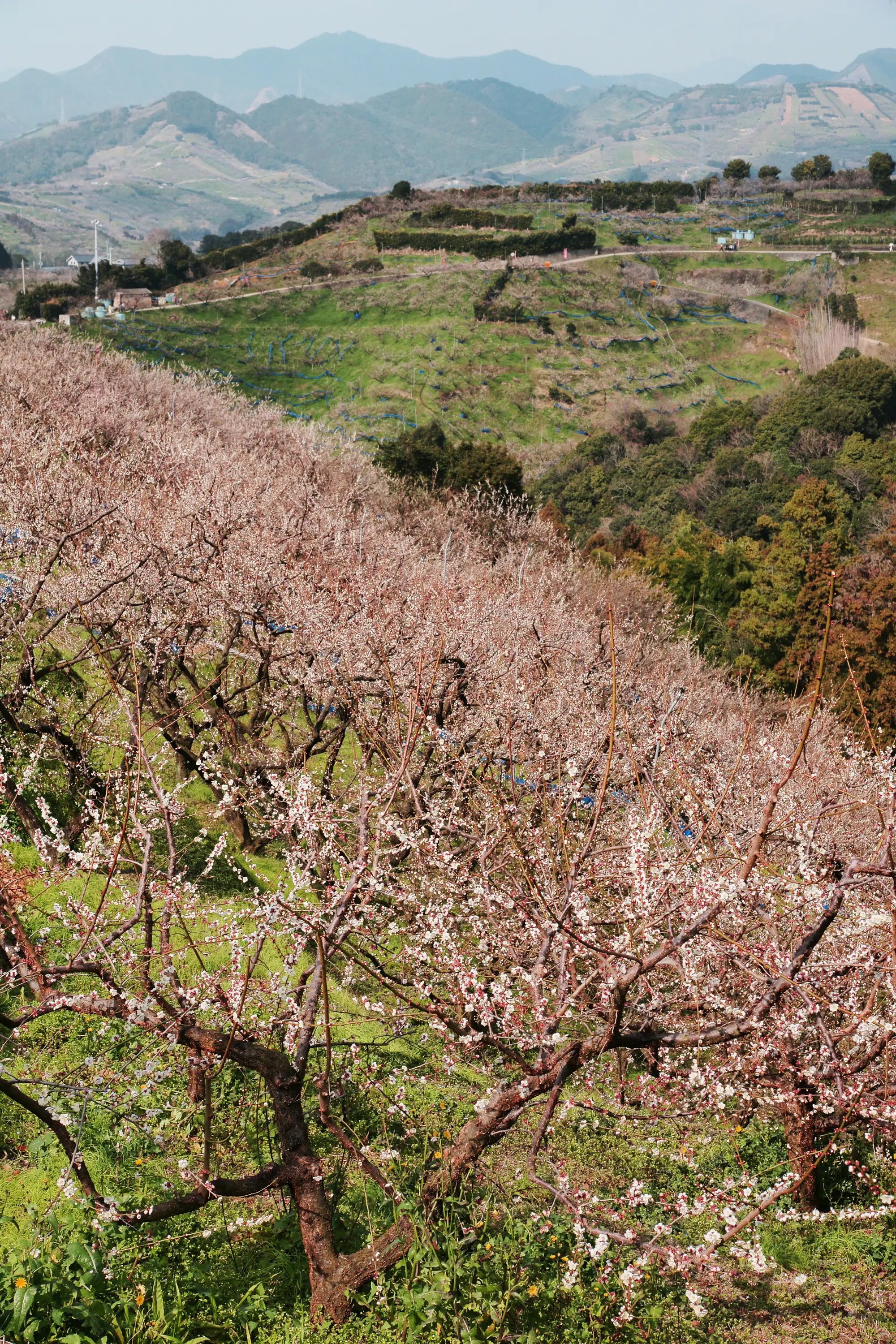
A hillside town where a farmer found the soft, thin-skinned plum now called nanko-ume in 1902, and where the orchards that grow it are recognized by the United Nations as a Globally Important Agricultural Heritage System.
Why the UN recognized a plum-growing system
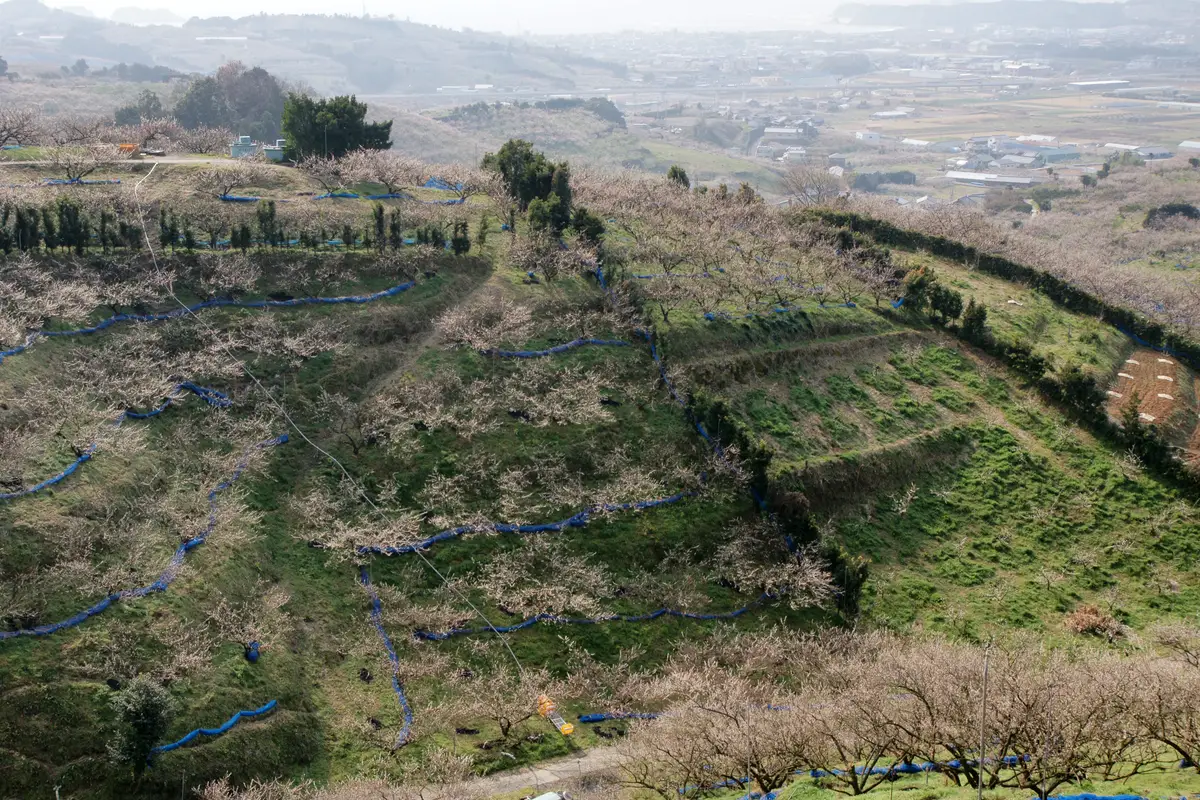
The Minabe-Tanabe Ume System is recognized not for the plums alone but for the way the whole hillside is managed. The slopes here are steep, gravelly and poor in nutrients, and there is little flat land for rice, so in the early Edo period the Tanabe domain encouraged farmers to plant ume instead. Farmers kept coppice forest on the ridgetops above the orchards; those trees hold rainwater and help prevent landslides, and the local ubame oak from them is fired into Kishu binchotan, a prized white charcoal. Native Japanese honeybees pollinate the plum blossoms, and grass left growing between the trees protects the slope from erosion and is cut as fertilizer. That loop, maintained for about 400 years, is what the GIAHS designation covers.
Minabe Bairin (南部梅林, read "Minabe" here, not "Nanbu") is where most visitors see it. The local slogan is "ichimoku hyakuman, kaori juri": a million blossoms at a glance, a fragrance carrying ten ri. The grove is said to have around 80,000 trees and is billed as one of the largest plum groves in Japan. It is a working orchard, not a park: the hillside belongs to farms that grow ume for umeboshi, and it is opened to visitors only during the blossom season, with a walking course, a viewpoint and food stalls selling umeboshi and imo-mochi (potato rice cakes).
Wakayama's ume dominate the national market: in 2022 the prefecture produced about 64,400 of Japan's 96,600 tonnes, according to Japan's Ministry of Agriculture. In August 2025 the same UN programme also recognized the stone-walled terraced mikan orchards of Arida and Shimotsu further north, so Wakayama now has two GIAHS-listed fruit-growing systems.
Minabe through the year
Blossom viewing and fruit picking are months apart. Decide which one you want before you plan the trip.
| Season | What happens | What visitors can do |
|---|---|---|
| Late January – early March | Plum blossom; peak usually around mid-February | Walk Minabe Bairin (open only in this season), weekend events and food stalls |
| Late May – June | Harvest of green ume, then ripe nanko-ume | Pre-booked picking experiences at individual farms |
| July – August | Ume are salted and sun-dried on farms to make umeboshi | Buy new-season umeboshi; little to see for visitors |
| Year-round | Processing and sales | Visit the Ume Shinkokan roadside station (free exhibits on ume and local products) |
Before you go
Minabe Bairin's opening dates shift every year with the bloom. In 2026 it opened from 31 January to 1 March, 8:00 to 17:00, with admission of ¥500 for adults and ¥200 for elementary and junior high school students. Check the Minabe Tourism Association's announcement for the current year rather than assuming last year's dates.
The grove is on a slope. Wear comfortable walking shoes, because the paths climb through the orchards; there are two walking courses and a viewpoint at the top. Pets are allowed.
June picking experiences are run by individual farms, such as Plum Kobo, Kishu Honjo Umeyoshi and JA Wakayama, not by a single central facility, and must be booked directly and in advance. As an example, Plum Kobo's green-plum picking costs ¥1,000 per person, takes about an hour, and includes 1kg of plums and a plum juice; it asks for bookings 4 to 5 days ahead, and its 2026 sessions were fully booked. Wear long sleeves, long trousers, work shoes, gloves and a hat.
The Ume Shinkokan in Minabe is a roadside station with a free exhibition on the history and varieties of ume and a shop selling local umeboshi. It is open 9:00–17:00 and closed on Tuesdays, except in February, when it opens daily.
Older guides mention Iwashiro Daibairin, another plum grove in Minabe. It has been closed since 2018 because its trees reached replanting age, so Minabe Bairin is now the place to go.
Minabe is a short train ride from Shirahama, which makes a blossom-season stop easy on the way to or from the beach and onsen town, or to the Kumano Kodo via Kii-Tanabe.
Minabe Bairin: visiting information
Figures below are for the 2026 season. Expect similar arrangements each year, with dates set according to the bloom.
| Item | Details |
|---|---|
| Open | Blossom season only; 31 January – 1 March in 2026 |
| Hours | 8:00 – 17:00 |
| Admission | ¥500 adults (high school and older), ¥200 elementary and junior high school students |
| Parking | ¥500 per car per day |
| By public transport | Seasonal bus from JR Minabe Station, about 10–15 minutes (runs only while the grove is open) |
| By car | About 6 minutes from Minabe IC on the Hanwa Expressway |
| Peak bloom | Usually around mid-February |
Getting to Minabe
Take the JR Kuroshio limited express from Shin-Osaka or Tennoji toward Shirahama and get off at Minabe Station (南部駅), about 2 hours from Osaka. Only some Kuroshio trains stop at Minabe, so check the timetable; otherwise change to a local train at Gobo or Kii-Tanabe. In blossom season JR has added extra Kuroshio stops at Minabe on weekends and holidays.
From Minabe Station, a seasonal Ryujin Bus runs to Minabe Bairin while the grove is open, taking about 10 to 15 minutes. A taxi is the alternative.
Harvest-season farms are spread across the hills around Minabe and neighbouring Tanabe, mostly away from the railway, so a car or taxi makes visiting them far easier.
Primary sources
- MAFF Japan — Globally Important Agricultural Heritage Systems, Minabe-Tanabe
- Minabe Town — Minabe-Tanabe Ume System designated GIAHS (2015)
- Minabe Bairin Kanbai Association — official site
- Minabe Tourism Association — Minabe Bairin
- Minabe Tourism Association — ume harvest experiences
- Minabe Town — plum grove opening schedule (including Iwashiro Daibairin closure)
- Minabe Town — Ume Shinkokan
- Kishu Tanabe Ume Promotion Council — the Nanko variety
- Plum Kobo — green plum picking experience
- Arida City — Arida-Shimotsu mikan system designated GIAHS (2025)
Last updated: