Wakayama · Japan
Getting Around
The Kii Peninsula splits into two separate rail networks that don't connect to each other. Here is what actually gets you from Osaka to each area, what it costs, and which pass covers which line.
Two networks, not one
It is easy to assume the areas on this site sit along one route, since they share one regional map. They do not. Koyasan is served by a private railway, Nankai, running south from Namba Station in Osaka. Everywhere else — the Kumano Kodo trailheads, Shirahama, Nachi and Katsuura — is served by JR West's Kuroshio limited express, running down the Pacific coast from Shin-Osaka and Tennoji. Wakayama City is on both: JR Wakayama Station and Nankai's Wakayamashi Station are separate stations a few kilometres apart, linked by city buses and a short JR line.
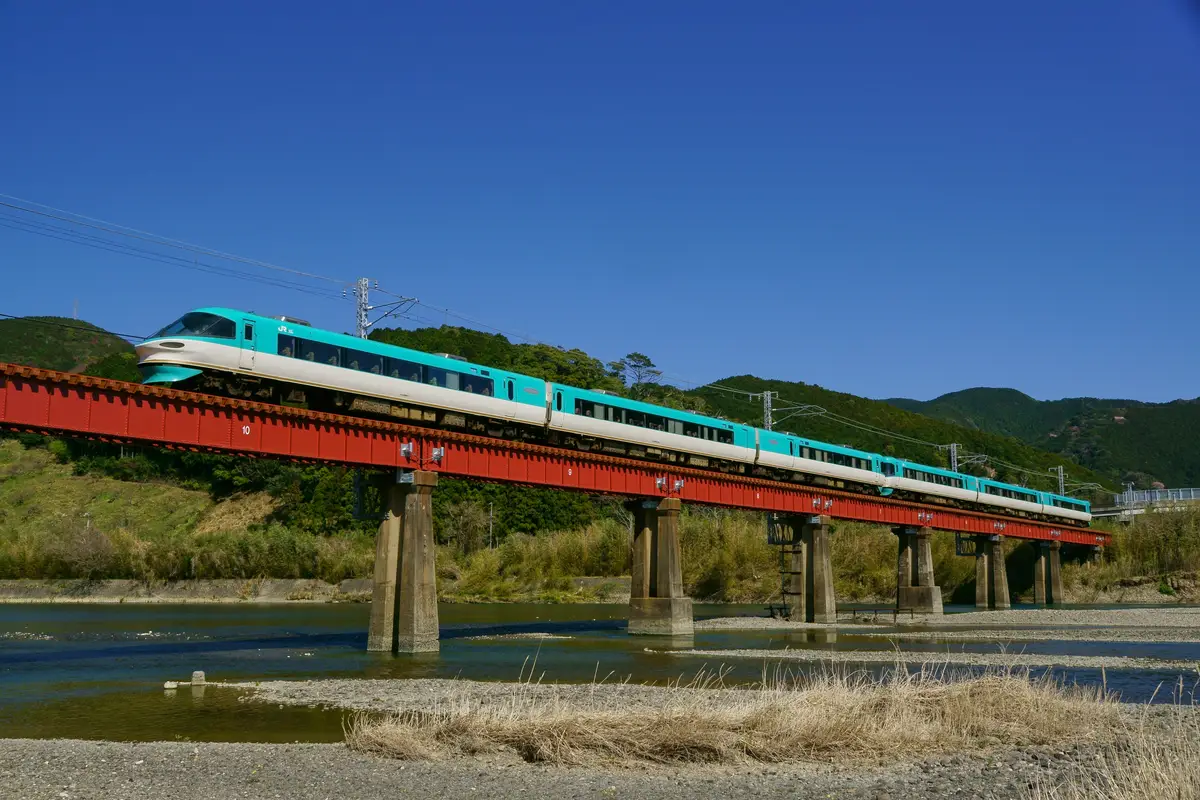
The Kuroshio has been all-reserved since March 2022; there are no unreserved cars. In the daytime it runs roughly once an hour, but many trains terminate at Shirahama, and only about a third of them continue to Kii-Katsuura and Shingu. Every Kuroshio stops at Wakayama, Gobo, Kii-Tanabe and Shirahama; smaller stations such as Yuasa and Minoshima are served by some trains only.
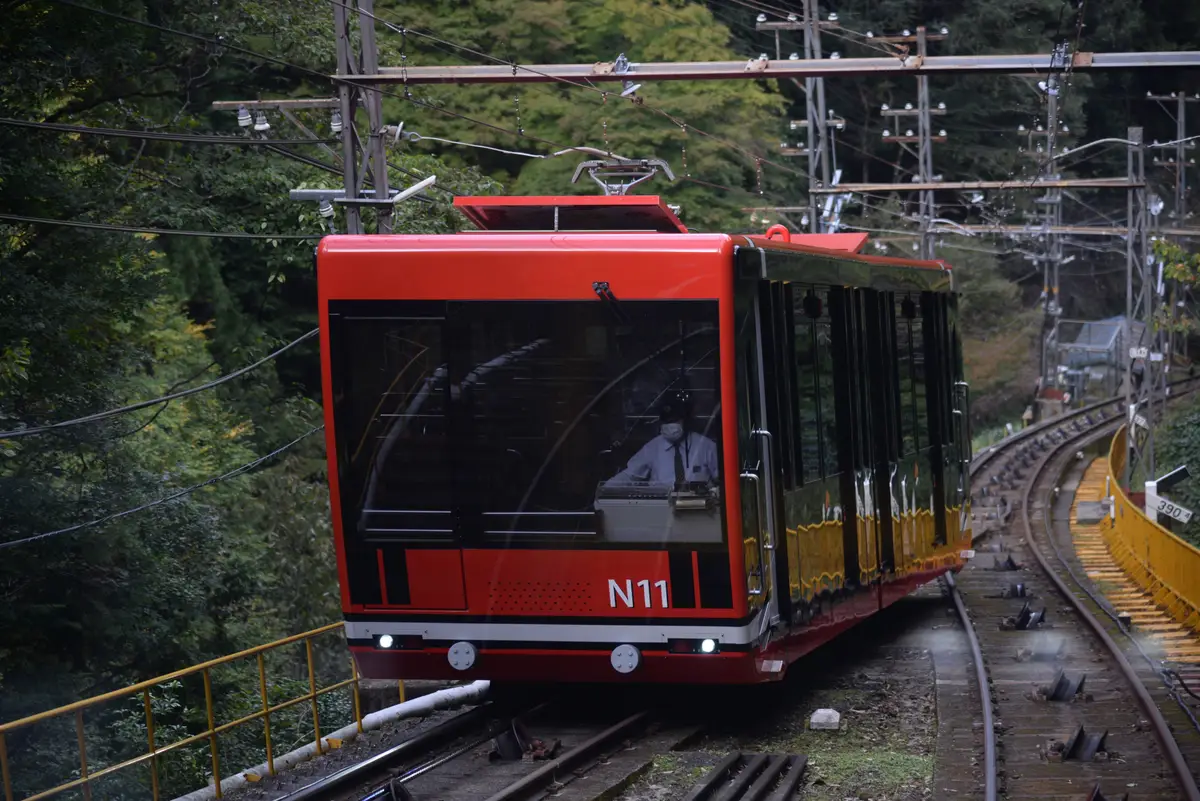
The Nankai Koya Line works differently. Most people take an express from Namba to Hashimoto, change there for a local train up the mountain to Gokurakubashi, and ride the five-minute cable car to Koyasan Station. A bus then takes about ten minutes into the temple town. The all-reserved Limited Express Koya runs straight through from Namba to Gokurakubashi for a surcharge but only a few times a day.
This matters when planning a route. Linking Koyasan with the coast in one trip means returning towards Osaka or Wakayama and heading back out on the other line, or taking a long bus connection over the mountains. Most itineraries treat Koyasan as a separate leg rather than a stop between coastal towns.
From Osaka to each area
Approximate one-way times and 2026 fares for one adult on the fastest practical route. Kuroshio fares are regular-season reserved-seat prices.
| Destination | Line | Time | One-way fare (approx.) |
|---|---|---|---|
| Koyasan | Nankai Koya Line from Namba, change at Hashimoto, then cable car | About 1 hr 40 min – 2 hrs | ¥1,430 (limited express adds ¥1,100); or the Koyasan World Heritage Ticket |
| Wakayama City | JR Kuroshio from Shin-Osaka, or Nankai from Namba | About 1 hour | Varies by line and train |
| Kumano Kodo (Takijiri-oji) | JR Kuroshio to Kii-Tanabe, then local bus (about 40 min) | About 3 – 3.5 hrs with connection | About ¥5,800 (JR) plus bus |
| Shirahama | JR Kuroshio from Shin-Osaka or Tennoji | About 2 hrs 30 min | About ¥6,140 |
| Nachi / Katsuura | JR Kuroshio to Kii-Katsuura, from Shin-Osaka | About 4 hours | About ¥7,400 |
Is a rail pass worth it?
The Kansai Wide Area Pass pays for itself on any trip to the far end of the Kuroshio. A regular-season round trip from Shin-Osaka to Kii-Katsuura costs about ¥14,900, well over the pass price, and a Shirahama round trip (about ¥12,300) roughly equals it on its own. The pass also covers the Haruka airport express and the Sanyo Shinkansen between Shin-Osaka and Okayama, so it suits a 5-day loop that includes Kansai Airport or Himeji.
The JR Kansai-Hiroshima Area Pass (¥17,000 for 5 days) lists the Kuroshio among its covered trains, but it is priced for a trip that also goes to Hiroshima. If Hiroshima is not on your route, the Kansai Wide Area Pass is the better fit.
The Koyasan World Heritage Ticket also comes in a version with a one-way Limited Express Koya seat (¥4,910 digital, ¥5,200 paper from Namba). The paper ticket adds a discount at Kongobuji that the digital one lacks. Both are valid for two consecutive days. If you are only going up and back in one day and not riding the mountain buses much, the plain fare (¥1,430 each way) can work out cheaper, so do the sum for your plans.
For the Kumano area, local buses do the heavy lifting: from Kii-Tanabe to Takijiri-oji and Kumano Hongu Taisha, and from Kii-Katsuura to Nachi. Buses are infrequent, so check the Tanabe City Kumano Tourism Bureau timetables before you set out.
A rental car makes sense once you are on the coast, particularly around Nachi and Katsuura where buses are sparse. The mountain roads up to Koyasan and across to Ryujin and Hongu are narrow and slow, so allow extra time there.
Arriving by air: airport limousine buses run from Kansai Airport Terminal 1 to JR Wakayama Station in about 40 minutes, around seven times a day. Nanki-Shirahama Airport has about three JAL flights a day from Tokyo Haneda, taking roughly 70 minutes, which can beat the train for Shirahama if you are coming from Tokyo.
Practical extras for international visitors
None of these are specific to the Kii Peninsula, but each solves a real problem for visitors arriving from abroad.
| Service | What it solves | Starting from | Book |
|---|---|---|---|
| Airalo eSIM | Mobile data as soon as you land at Kansai Airport, without hunting for a physical SIM counter. | From $4.50 | Airalo → |
| Kiwitaxi airport transfer | A fixed-price private car straight from Kansai Airport to Koyasan, Shirahama, or your hotel — useful with heavy luggage or a late arrival, when buses and trains have stopped running. | Price shown before booking | Kiwitaxi → |
| Localrent car rental | Compares rates across Japanese rental agencies — useful once you are past Koyasan and exploring the coast at your own pace. | Price shown before booking | Localrent → |
Connecting the areas without returning to Osaka
The coastal areas — the Kumano Kodo trailhead at Kii-Tanabe, Shirahama, and Nachi/Katsuura — sit on the same JR Kuroshio line, in that order heading south, so moving between them is a matter of re-boarding the same limited express. Kii-Tanabe to Shirahama is about 15 minutes; Shirahama to Kii-Katsuura is about 1 hour 30 minutes.
Koyasan is the exception, and there are three realistic ways across. The first is the seasonal "Seichi Junrei" bus via Gomadanzan and Ryujin Onsen: in 2026 it runs from 2 April to 30 November, not on Tuesdays or Wednesdays, with one departure a day from Koyasan Station at 9:36 that reaches Kii-Tanabe Station at 13:05, and with connections toward Hongu. It does not run from December to March.
The second is train and bus via Gojo: Nankai down to Hashimoto, the JR Wakayama Line east to Gojo, then the Nara Kotsu bus south to Hongu. The Tanabe City Kumano Tourism Bureau estimates about 5.5 hours in total and calls it often the quickest public-transport route. The third is to go back down to Wakayama and take the Kuroshio south, which takes longer but runs all year.
Walkers can also cross on foot by the Kohechi, the mountain route of the Kumano Kodo between Koyasan and Hongu, but it is a multi-day hike over high passes and needs proper planning.
Primary sources
- JR West — Kansai WIDE Area Pass
- JR West — Kansai-Hiroshima Area Pass
- JR West Odekake — Limited Express Kuroshio
- Nankai Electric Railway — Koyasan World Heritage Ticket
- Nankai Electric Railway — Limited Express Koya
- Tanabe City Kumano Tourism Bureau — Koyasan and Hongu access
- Ryujin Bus — Koyasan–Kumano Seichi Junrei Bus
- Kansai Airport — limousine bus to Wakayama
Last updated: