Wakayama · Japan
Nachi & the Coast
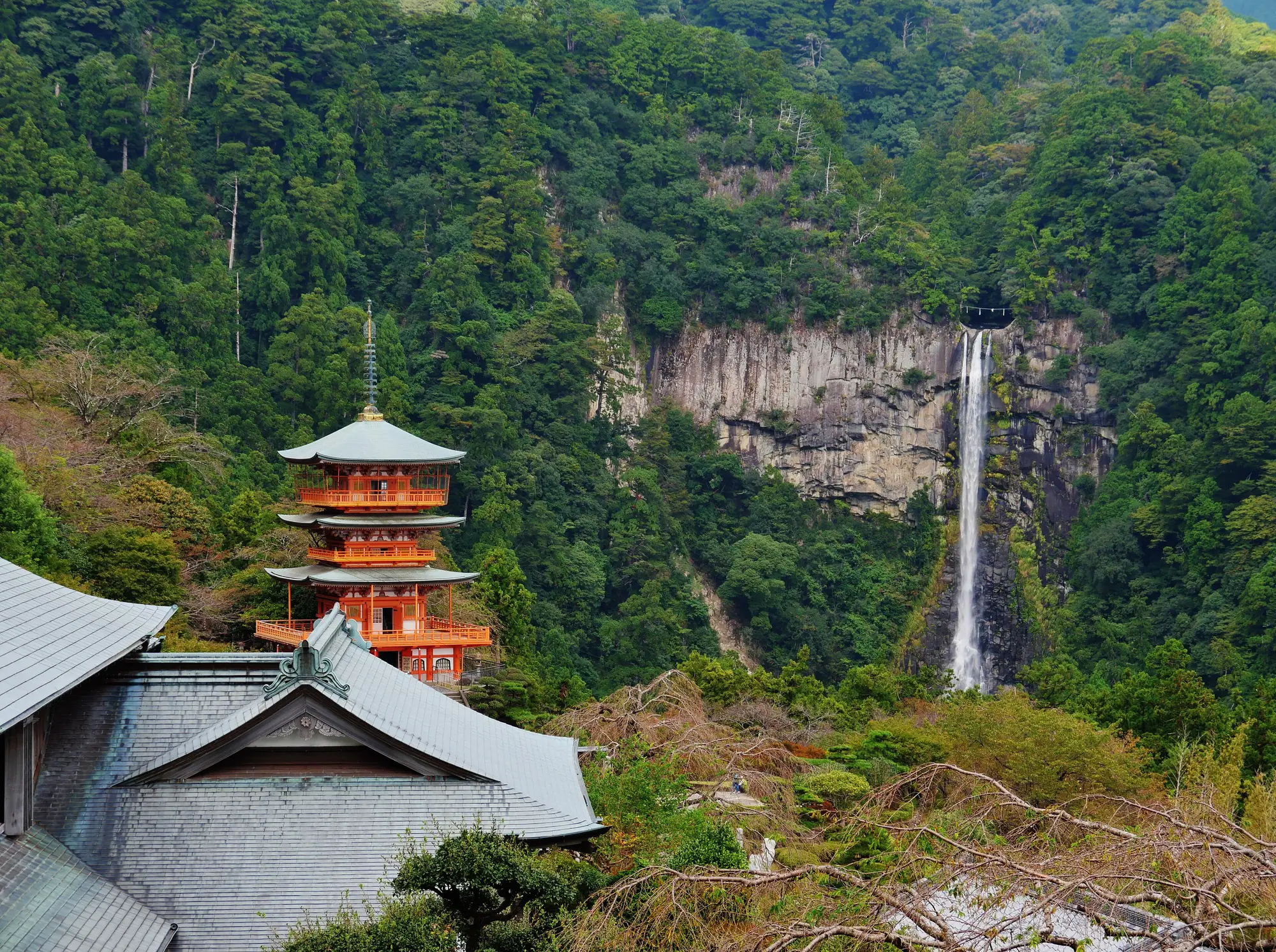
Japan's tallest single-drop waterfall, beside a shrine and vermilion pagoda that TIME named among the World's Greatest Places of 2025 — with a tuna-fishing port and hot-spring town half an hour away.
A shrine, a temple and a waterfall, together
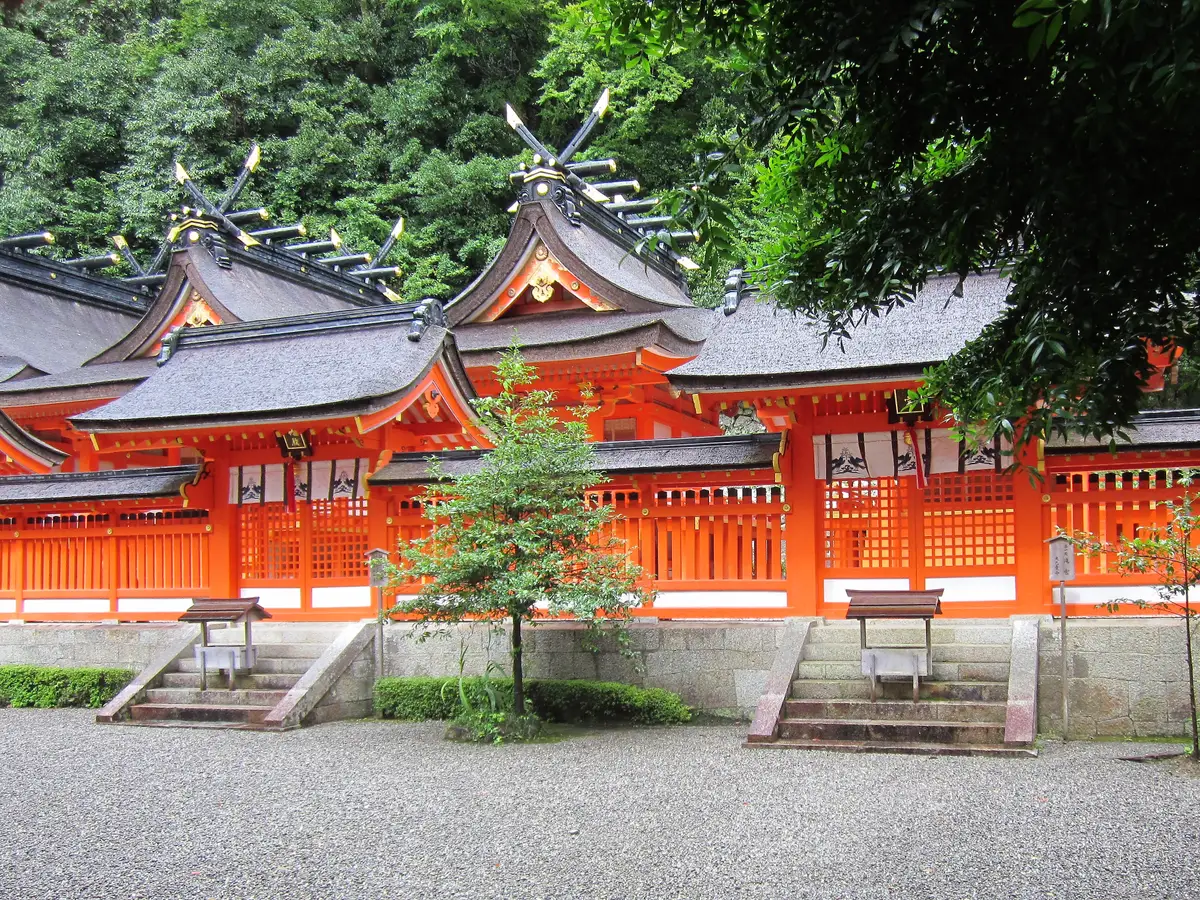
Worship at Nachi began with the waterfall. Nachi Falls is 133 metres high and about 13 metres wide at the lip, dropping into a basin about 10 metres deep. Hiro-jinja, the shrine at its foot, has no main hall at all: the falls itself is the object of worship. According to Kumano Nachi Taisha, the deities were first worshipped beside the falls and were moved to the shrine's present hillside site about 1,700 years ago. The shrine's main deity is Kumano Fusumi no Okami, identified with the goddess Izanami, and because it also enshrines the god of the falls, Nachi honours one more deity than the other two Kumano grand shrines.
Kumano Nachi Taisha and Seiganto-ji share the same hillside, a rare sight in Japan of a Shinto shrine and a Buddhist temple standing directly side by side. It is a legacy of the combined Shinto-Buddhist worship that defined Kumano before the Meiji government separated the two religions in the 1860s and 1870s. Seiganto-ji is the first temple of the Saigoku 33-temple Kannon pilgrimage, and its main hall, rebuilt in 1590 on the orders of Toyotomi Hideyoshi, is an Important Cultural Property. The three-storey pagoda in the famous photo is a 1972 reconstruction; it was freshly repainted and reopened in December 2024, and a lift inside takes visitors to the top floor.
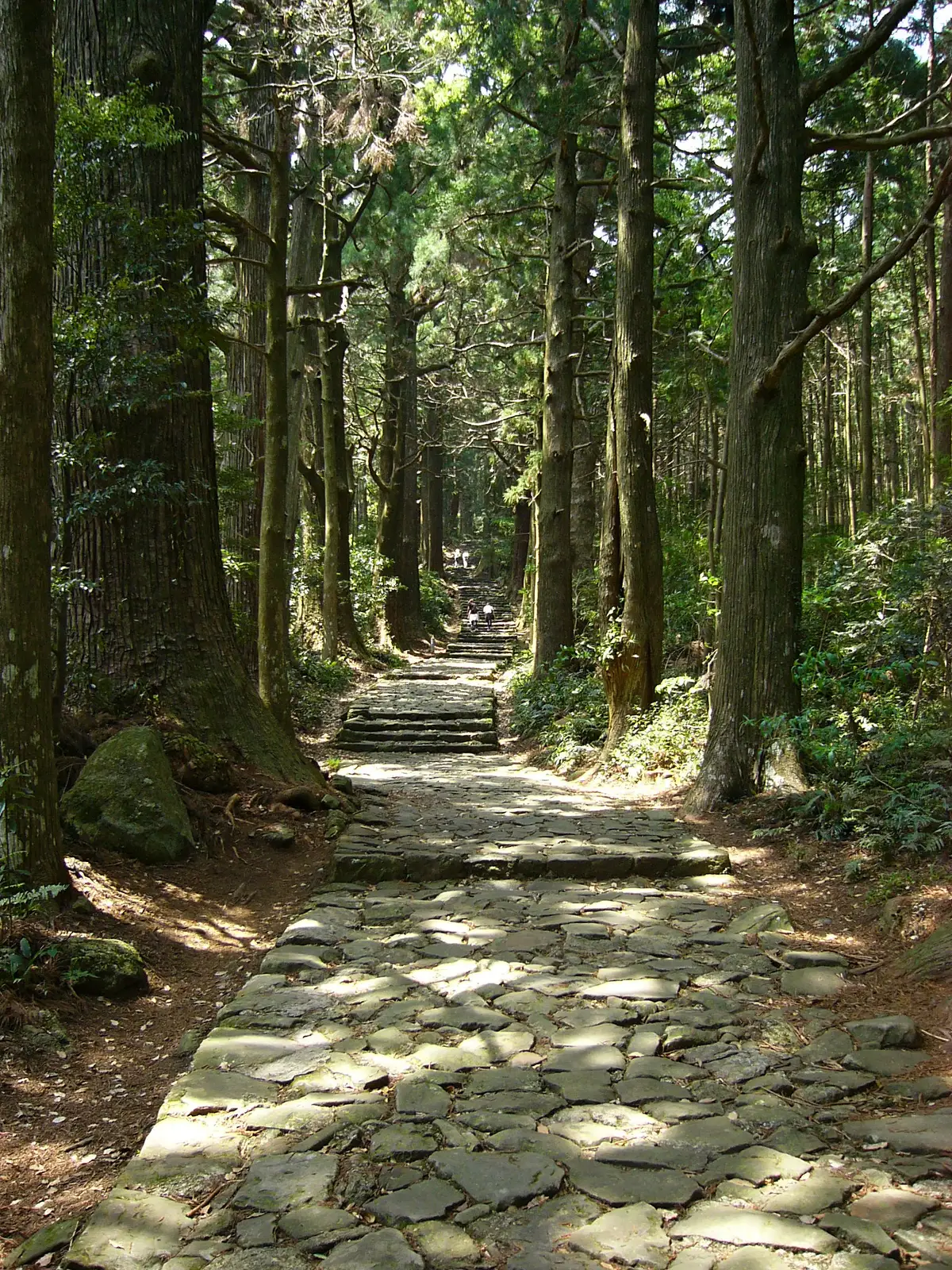
Most visitors reach the shrine via the Daimon-zaka, a stone-paved approach through old-growth cedar that is itself a well-preserved section of the Kumano Kodo. It runs about 600 metres with 267 stone steps, starting beside the Meoto-sugi, a pair of huge "married" cedars said to be around 800 years old. From the top, about 470 more steps lead up past souvenir shops to the shrine. It is a steady climb rather than a hard one, but it is steps all the way.
At Kumano Nachi Taisha, look for the bronze statue of Yatagarasu, the three-legged crow that guides travellers in Kumano legend, and the Karasu-ishi, a stone where the crow is said to have rested. Behind the halls, a camphor tree estimated at 850 years old has a hollow trunk you can walk through if you carry a prayer stick (¥300) or votive plaque (¥500).
Where to stay: Katsuura onsen
Most visitors base themselves in Katsuura's hot-spring town rather than at Nachi itself, which has little accommodation of its own. Both of these hotels sit on the water and are reached by their own shuttle boats from a pier a few minutes' walk from Kii-Katsuura Station.
| Hotel | From (per night) | What makes it different | Book |
|---|---|---|---|
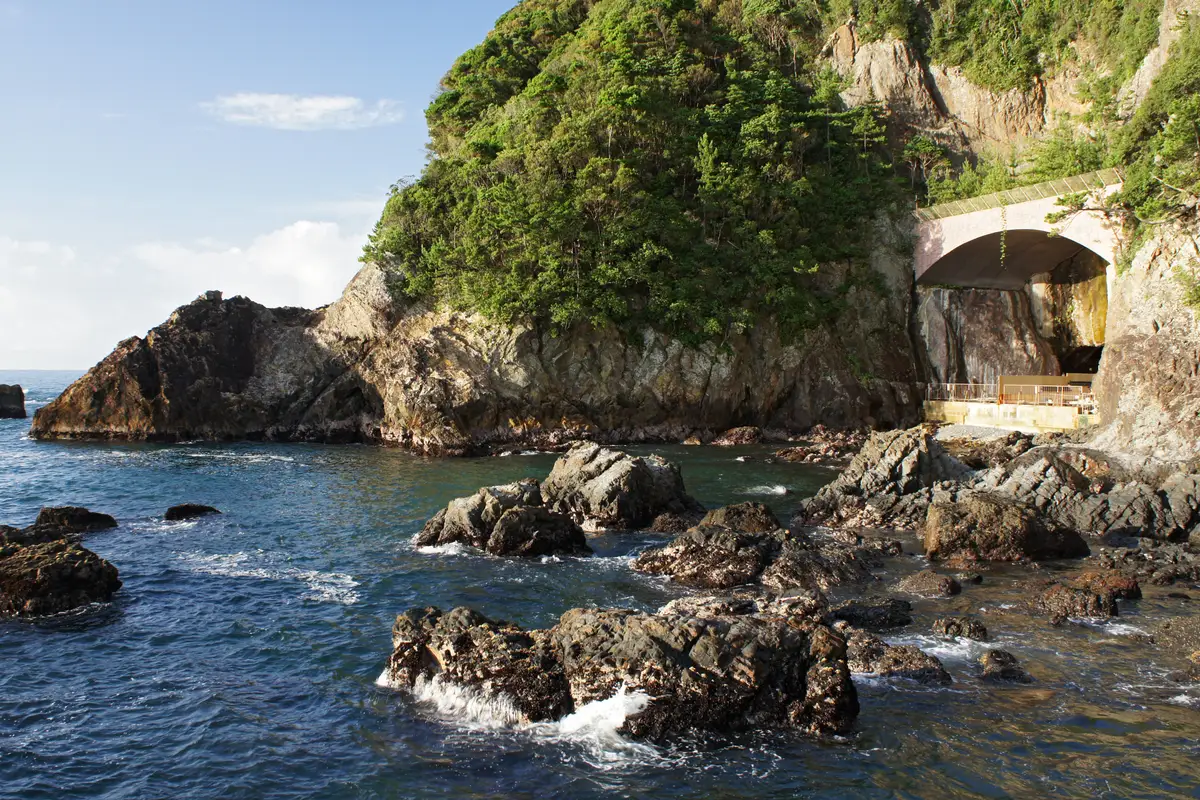
| Hotel Urashima | $166 | A sprawling resort of almost 400 rooms on a headland, reached by the hotel's own boat. Its famous bath, Bokido, is a natural sea cave facing the Pacific. The Nissho-kan wing reopened after renovation on August 1, 2026. | Booking.com → |
| Kumano-bettei Nakanoshima | $693 | A 44-room inn on its own small island, 5 minutes by hotel boat. Rooms in the newer Nagi-no-Sho wing have private open-air baths (heated water, not hot-spring water); the shared baths are hot spring. | Booking.com → |
Before you go
The easiest order is uphill first. Take the bus from Kii-Katsuura Station to the Daimonzaka stop (about 20 minutes), walk up the Daimon-zaka to the shrine and temple, then walk about 15 minutes downhill to the falls and catch the bus back from the Nachi-no-Taki-mae stop.
The classic photo of the pagoda framed against the falls is taken from the terrace beside Seiganto-ji's pagoda. Arrive early to get it without a crowd of other photographers in frame; the pagoda itself opens at 8:30.
At the falls, the paid viewing platform (Otaki-haisho-butai, ¥500) takes you closest to the water. Along the way you can drink from a spout of the falls' water, which is said to bring long life. The shrine announced in July 2023 that wheelchair access to the falls was suspended, so check ahead if you need step-free access.
The treasure hall of Kumano Nachi Taisha is closed on Wednesdays. The rest of the site is open daily.
If your visit lands on July 14th, you will see the Nachi Fire Festival, one of Japan's three great fire festivals, held on these same grounds. Expect traffic controls and full car parks that day.
Staying in Katsuura? On most mornings you can watch Katsuura's tuna auction for free before breakfast. The exceptions: the market is closed on Saturdays, and tuna is not auctioned on most Tuesdays.
Nachi is one of the three Kumano grand shrines. Many visitors combine it with the other two, Kumano Hayatama Taisha in nearby Shingu and Kumano Hongu Taisha inland, which you can reach on foot via the Kumano Kodo or by bus.
Kushimoto, with Honshu's southernmost point and the rock pillars of Hashigui-iwa, is further along the same coastal line toward the tip of the peninsula.
Visiting: hours and admission
Walking the grounds is free. You pay only for the pagoda, the falls viewing platform and the treasure hall.
| Site | Hours | Admission |
|---|---|---|
| Kumano Nachi Taisha (grounds) | Always open; shrine office 6:00 – 16:30 | Free |
| Treasure hall (Homotsuden) | 8:30 – 15:30, closed Wednesdays | ¥300 adults / ¥200 children |
| Seiganto-ji main hall | 7:00 – 16:30 | Free |
| Seiganto-ji three-storey pagoda | 8:30 – 16:00 | ¥500 adults / ¥300 children |
| Nachi Falls viewing platform (Hiro-jinja) | Daytime; check on arrival | ¥500 adults / ¥200 children |
Getting to Nachi and Katsuura from Osaka
Take the JR Kuroshio limited express from Shin-Osaka or Tennoji to Kii-Katsuura Station, about 3.5 to 4 hours. Not every Kuroshio runs this far south, as many terminate at Shirahama, so check the timetable for a through train.
From Kii-Katsuura Station, Kumano Gobo Nankai buses run to the Daimonzaka stop in about 20 minutes and to the Nachisan stop, beside the shrine, in about 30 minutes. A taxi to the shrine takes about 20 minutes.
Hotel Urashima and Kumano-bettei Nakanoshima both run shuttle boats from the pier near the station. If you are coming from the Kumano Kodo, buses link Hongu with Shingu in about an hour, and JR trains run from Shingu to Kii-Katsuura in roughly 20–30 minutes.
Primary sources
- Kumano Nachi Taisha — Hiro-jinja and Nachi Falls
- Kumano Nachi Taisha — shrine buildings and grounds
- Kumano Nachi Taisha — access
- Seiganto-ji — hours and grounds
- Tanabe City Kumano Tourism Bureau — Kumano Nachi Taisha
- Wakayama Prefecture official tourism site — Daimon-zaka to Nachi Falls model course
- TIME — World's Greatest Places 2025: Kumano Nachi Taisha and Seigantoji
- Hotel Urashima — day-use hot springs
- UNESCO — Sacred Sites and Pilgrimage Routes in the Kii Mountain Range
Last updated: