Wakayama · Japan
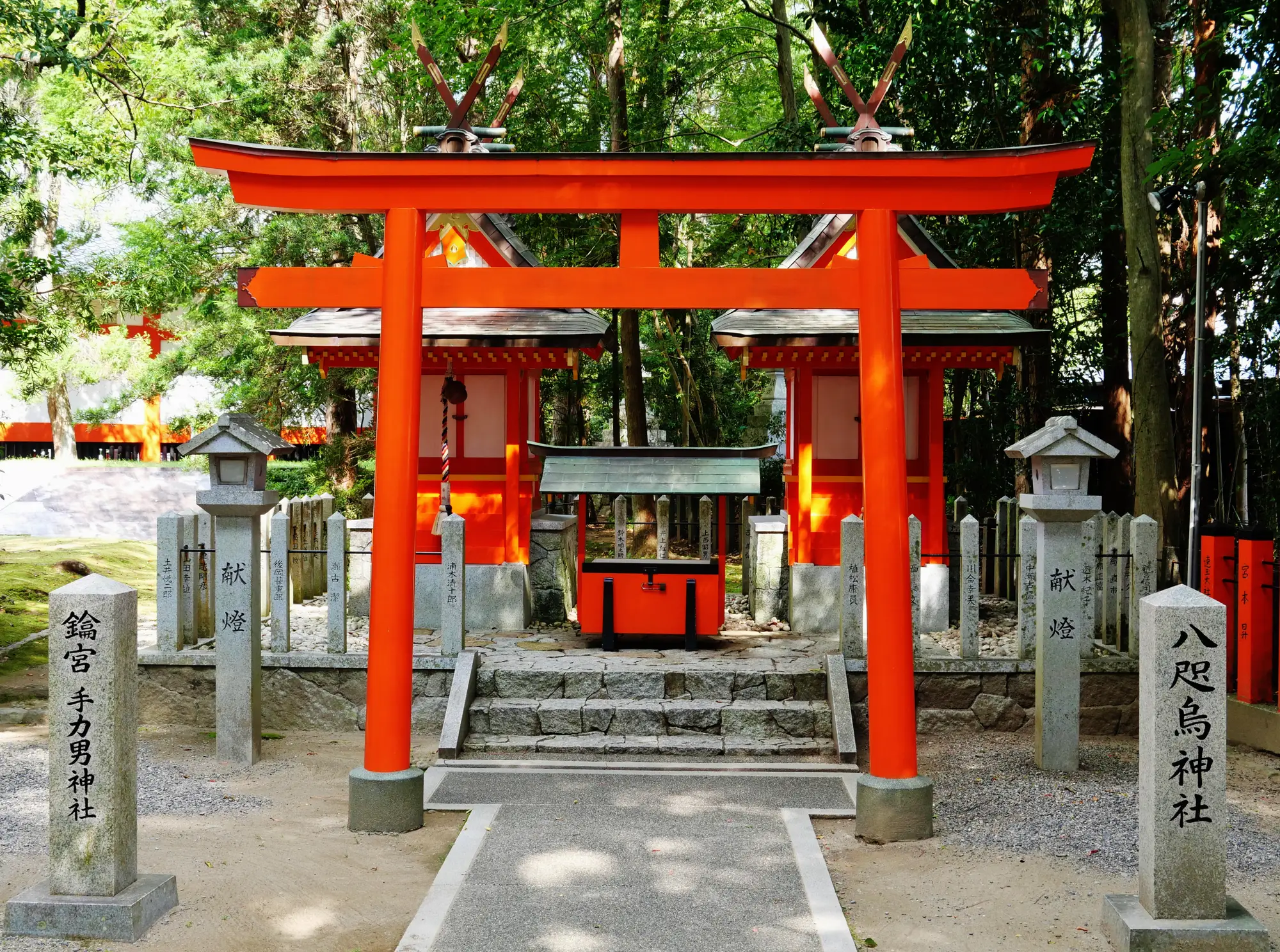
Kumano Hayatama Taisha
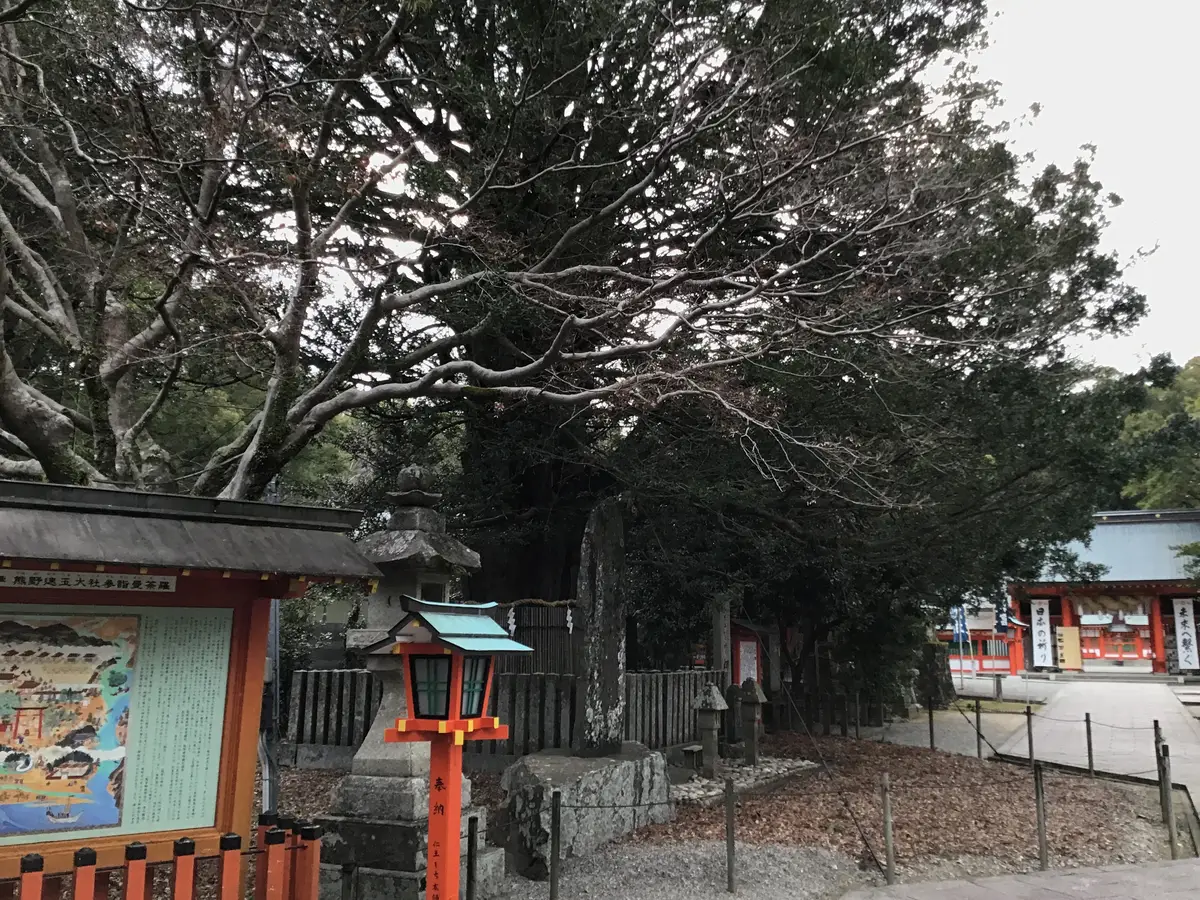
The third of the three Kumano grand shrines, in the river town of Shingu — where the ancient pilgrimage route from Hongu finally reaches the sea, beside a 1,000-year-old sacred tree and a boulder said to be where the Kumano gods first descended.
The river route's final stop
Traditional Kumano pilgrimage did not only mean walking. One historic route down from Hongu followed the Kumano River itself, by raft, ending at Shingu near Hayatama Taisha — a very different arrival from the forest trails leading to the other two grand shrines. That river approach can still be experienced today as a guided boat trip on the Kumano River.
Behind the shrine, on a hill called Kamikura-yama, its subsidiary Kamikura-jinja enshrines a single sacred boulder, Gotobiki-iwa — a name from local dialect for "toad," describing the rock's shape. The Nihon Shoki (Japan's 8th-century chronicle) names this rock "Ama-no-Iwatate" and ties it to Emperor Jinmu's legendary eastern campaign; it is considered the founding site of Kumano worship itself, with Hayatama Taisha built later at the base of the hill as worship moved down to more accessible ground.
Visiting: hours and admission
The shrine grounds are free to enter. The treasure hall, a separate building on the same grounds, charges admission.
| Site | Hours | Admission |
|---|---|---|
| Shrine grounds | Sunrise – 17:00 | Free |
| Treasure hall (Shinpokan) | 9:00 – 16:00 | ¥500 |
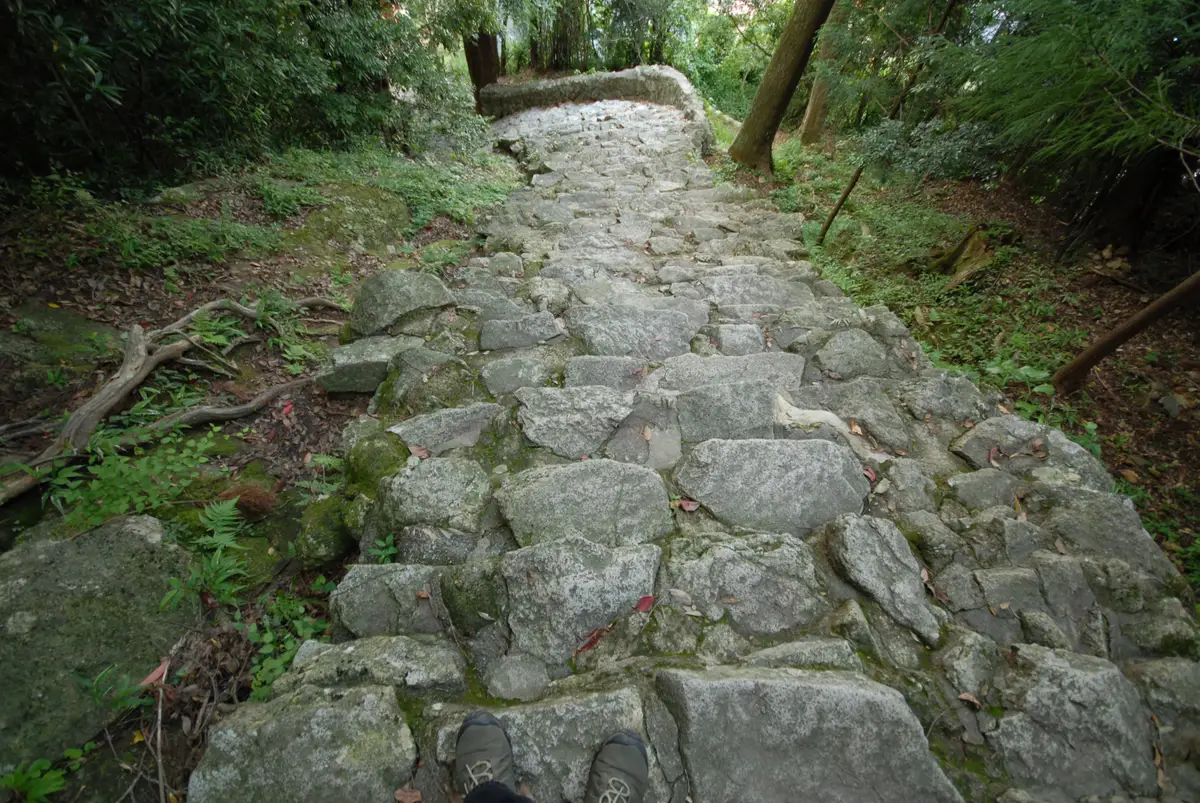
| Kamikura-jinja (538 stone steps) | Daylight hours | Free |
Before you go
Wear shoes with real grip, especially after rain — the stone is uneven and can be slick.
On February 6 each year, the stairway is the site of Oto Matsuri, a 1,450-year-old fire festival: roughly 2,000 white-robed men carrying lit pine torches descend the 538 steps together, a spectacle locally described as "a mountain of fire, a descending dragon." It is one of Japan's more physically dramatic festivals and worth timing a visit around if you can.
A second major festival, the Mifune Matsuri boat festival, runs October 15–16: a sacred-palanquin procession on the 16th is followed by nine ceremonial boats racing on the Kumano River around Mifune-jima islet. Oto Matsuri and Mifune Matsuri were jointly designated a National Important Intangible Folk Cultural Property in 2016.
Shingu's station makes a practical midpoint stop if you're combining Hongu with Nachi and Katsuura by rail rather than by car.
The Kumano River boat trip from near Hongu down to Shingu is seasonal and requires advance reservation through the local tourism association, not a walk-up ticket.
Getting to Shingu from Osaka
Take the JR Kuroshio limited express from Shin-Osaka or Tennoji to JR Shingu Station — roughly 3.5 hours — then it's about a 15-minute walk to Kumano Hayatama Taisha.
If you're touring all three grand shrines, Shingu's position on the coastal rail line makes it a natural link between an inland visit to Hongu and a coastal stop at Nachi or Katsuura.