Wakayama · Japan
Kushimoto & Cape Shionomisaki
A line of 40 rock pillars marching into the sea, a lighthouse you can climb at Honshu's southernmost point, and a shipwreck story from 1890 that still brings Turkish visitors to this small fishing town.
Rock pillars, warm-water coral, and a shipwreck that built a friendship
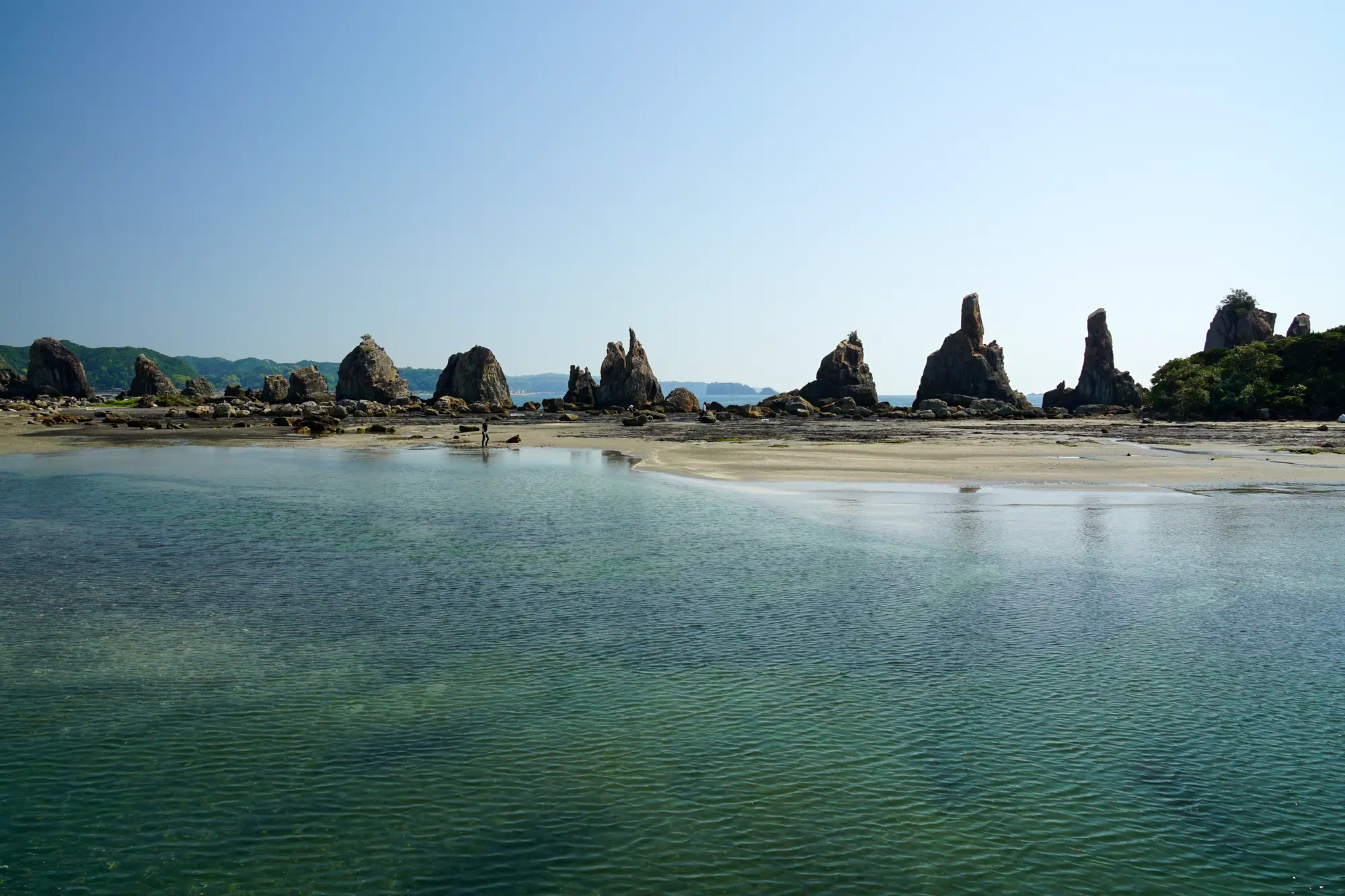
Hashigui-iwa formed from a volcanic dike — a wall of harder rhyolite rock that intruded into the softer mudstone layers around this coast roughly 14–15 million years ago. Over time the sea eroded the softer mudstone away and left the harder rock standing as around 40 pillars of varying heights, running roughly 850 metres toward the island of Kii-Oshima. A local legend credits them to the monk Kobo Daishi, who is said to have bet a demon he could build a bridge to the island in a single night — the demon, fearing defeat, mimicked a rooster's crow to trick him into stopping before dawn, leaving the bridge unfinished. The rocks are a National Scenic Spot and Natural Monument, and a well-known spot for photographing sunrise between the pillars. They are also close enough to Kushimoto Station to walk to, unlike Cape Shionomisaki itself.
The waters around Kushimoto hold the world's northernmost large community of hermatypic (reef-building) coral — not a coral reef in the structural sense, but living coral surviving this far from the tropics thanks to the warm Kuroshio Current running close to shore. Kushimoto Marine Park, opened in 1970 as Japan's first marine park, protects these coral communities and runs an aquarium, an underwater observation tower, and a glass-bottom boat tour over them.
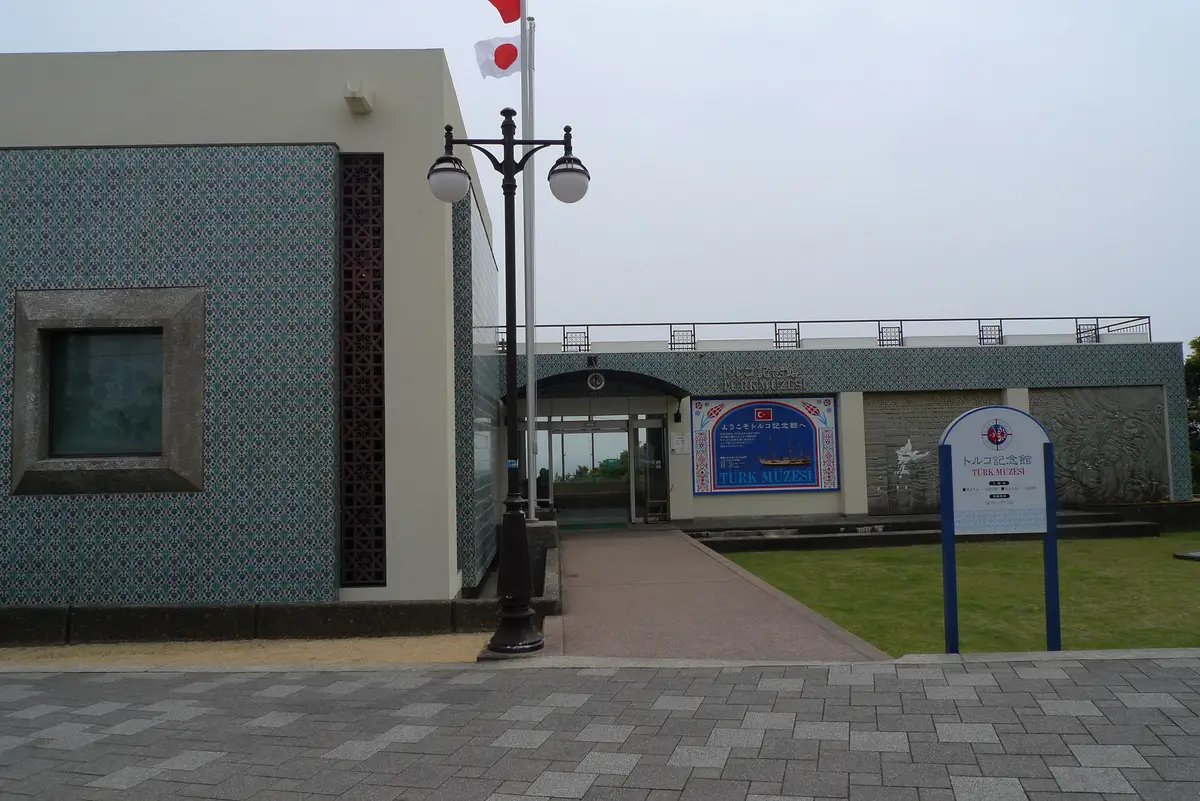
In September 1890, the Ottoman frigate Ertugrul was caught in a storm and wrecked on a reef off Kashinozaki on Kii-Oshima island, near Cape Shionomisaki. Of a crew of roughly 650, 587 died and 69 survived. The villagers of Kashino turned out to help the survivors, and their rescue is still remembered today at the Kushimoto Turkish Memorial and Museum on Kii-Oshima. Kushimoto holds a memorial ceremony with delegations from its Turkish sister cities every five years.
Kushimoto's main sights
The three sights below are spread along the coast rather than clustered together, so plan on a local bus, taxi, or rental car to link them.
| Sight | Hours | Admission |
|---|---|---|
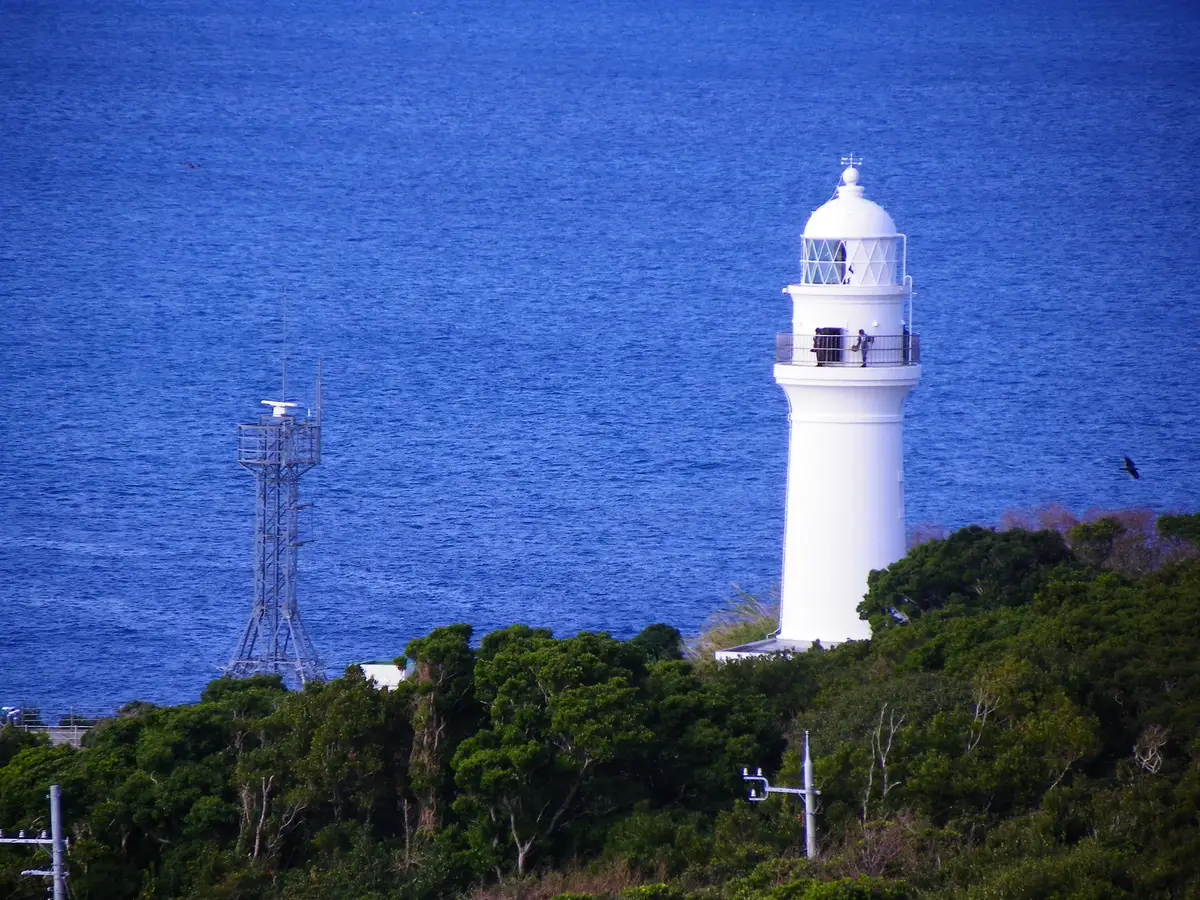
| Shionomisaki Lighthouse (climbable) | 8:30–12:00 & 13:00–17:00 weekends/holidays Mar–Sep, otherwise 9:00–16:30 with a midday closure | ¥300 (junior high age and up; younger free) |
| Kushimoto Marine Park aquarium | Check official site for current hours | From ¥1,600 (adult), combo tickets available |
| Kushimoto Turkish Memorial and Museum (Kii-Oshima) | 9:00–17:00, no closed days | ¥500 adult / ¥250 elementary–high school |
Before you go
Hashigui-iwa is close enough to walk to from Kushimoto Station, roughly 2km or about 20–25 minutes on foot. Cape Shionomisaki is further, around 6km away, and is not realistic to walk — plan on a local bus, taxi, or car.
For the classic photo of the sun rising between the rock pillars at Hashigui-iwa, arrive well before dawn and check the season, since the sun only lines up with the gaps at certain times of year.
Kushimoto Marine Park's glass-bottom boat tour is the easiest way to see the coral without diving, though certified divers can also dive the site directly.
A night illumination event has run at Hashigui-iwa in past years around late October to early November — check the tourism association's event calendar if your trip falls in that window.
For somewhere to stay near the station or the cape, a Booking.com search for Kushimoto covers the small hotels and ryokan in town.
Getting to Kushimoto from Osaka
Take the JR Kuroshio limited express from Shin-Osaka, Osaka, or Tennoji to Kushimoto Station — roughly 3.5 hours, continuing on the same line from Shirahama and Kii-Tanabe. Some services terminate at Shirahama, so check for a through train or a connection.
From Kushimoto Station, Hashigui-iwa is a walkable 2km; a local bus or taxi covers the further stretch to Cape Shionomisaki.
Kushimoto also sits on the same coastal line as Kii-Katsuura and Shingu, making it a workable stop on a longer loop through the Nachi and Katsuura area.