Wakayama · Japan
Yuasa
Japanese tradition traces soy sauce to this small port town on the Kii Peninsula, where liquid from a Zen monk's miso recipe turned out to be better than the miso. A handful of breweries here still make it the slow way, in wooden vats.
An accident that became a national condiment
The origin story explains what you are looking at when you walk around Yuasa. In this telling, soy sauce was not invented on purpose. It was noticed: a by-product of miso-making that turned out to be worth selling on its own. Yuasa is where that happened, according to tradition, and where the techniques for doing it deliberately were refined. Fermented soybean seasonings existed in China long before, so historians treat "birthplace" as the birthplace of Japanese soy sauce brewing, which is how Japan Heritage words it.
The monk behind the story, Kakushin, was invited to head Kokokuji temple in neighbouring Yura after his return, turning it into a Zen temple. Kokokuji calls itself the birthplace of kinzanji miso, of the soy sauce that came from it, and of the shakuhachi flute played by wandering komuso monks, all things Kakushin is said to have brought back from China. Kinzanji miso, a chunky miso studded with vegetables, is still sold in Yuasa shops today.
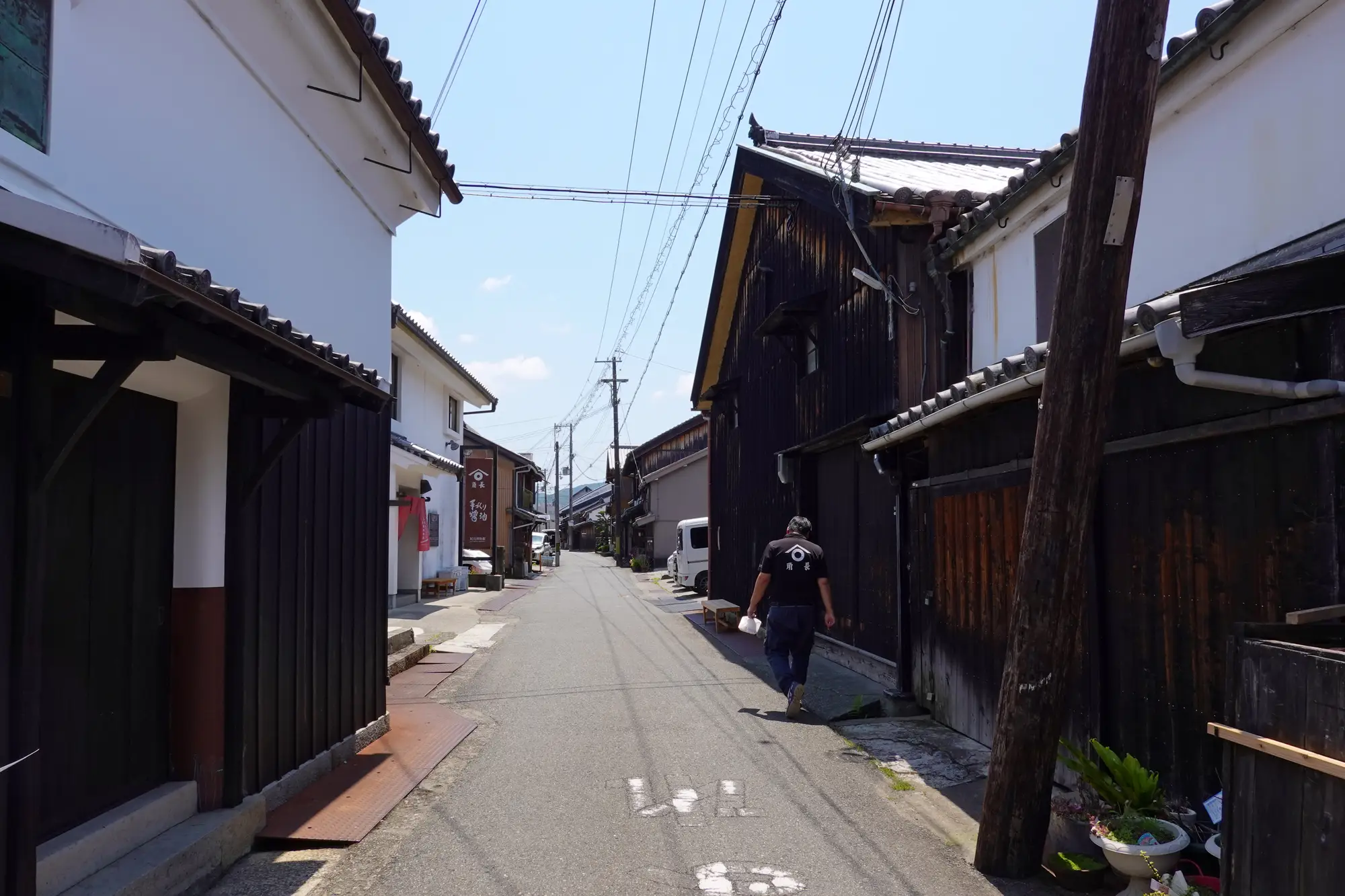
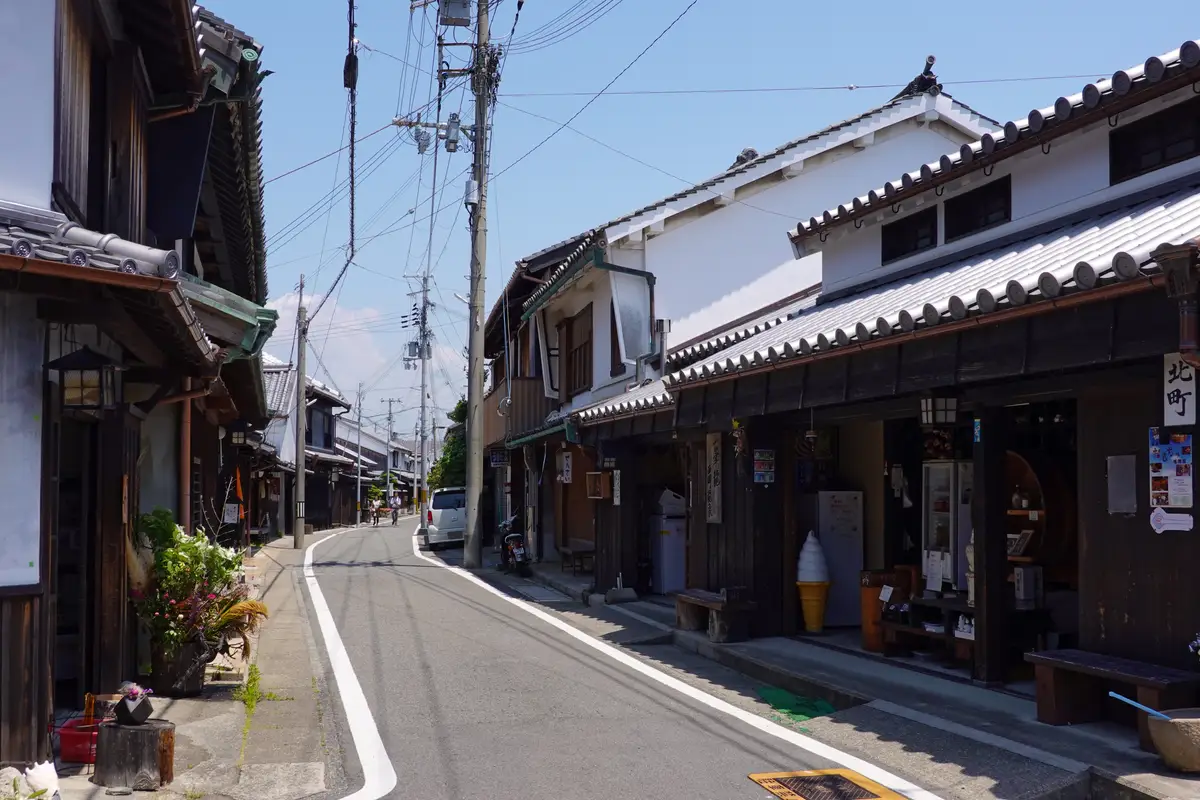
Under the Kishu Tokugawa domain, Yuasa soy sauce was given official protection, and the trade grew into the town's main industry. The preserved district covers about 6.3 hectares, roughly 400 metres east to west and 280 metres north to south, across the Kitamachi, Kitakajimachi, Kitanakamachi and Kitahamamachi streets. Gabled, tile-roofed merchant houses with lattice fronts and earthen storehouses line narrow lanes, and the old canal, Daisenbori, where boats once loaded soy sauce for Osaka, still survives.
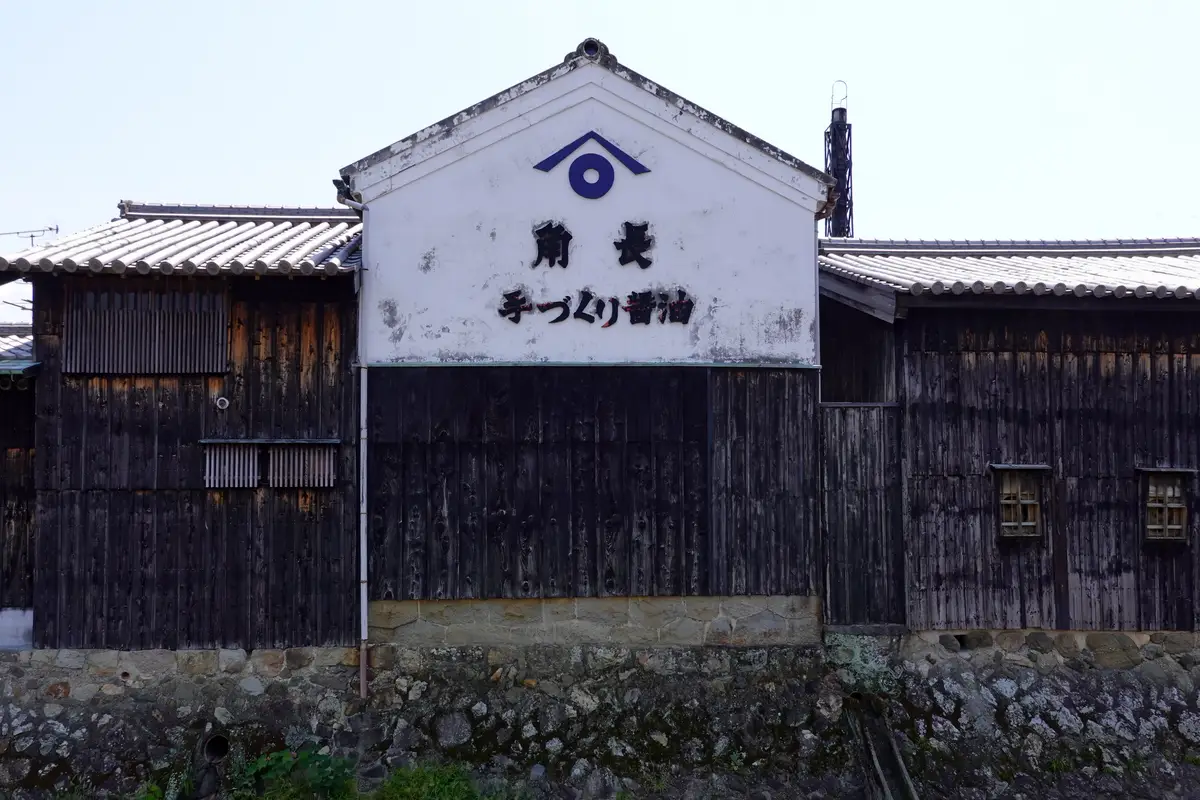
Yuasa still smells like a working brewery town rather than a museum, because it is one. Kadocho, founded in 1841, still brews in its old wooden buildings inside the district; eleven of them were designated national Important Cultural Properties in 2022, the first in the town. The eleven listed Kadocho buildings, including the main house, soy sauce storehouses, a koji room and a grain store, cover the whole process from making koji to pressing and heating the sauce, and they are still in use. Yuasa Soy Sauce Co., a larger brewery on Route 42 about ten minutes' walk from the station, runs the most visitor-friendly tours.
What to see in Yuasa: hours and fees
The three main stops are all free to enter. Kadocho's museum needs a phone reservation, which is easy to miss.
| Place | What it is | Hours | Admission |
|---|---|---|---|
| Kadocho Soy Sauce Museum & Shokunin-gura | Dioramas, panels and real brewing tools at a brewery founded in 1841 | 9:00–12:00, 13:00–17:00; reserve by phone (0737-62-2035) | Free |
| Jinburo | A bathhouse that operated from before the 1850s until 1985, now a local history museum | 9:30–16:30; closed Wednesdays (next weekday if a holiday) and New Year | Free |
| Yuasa Soy Sauce Co. (Kuyo-gura) | Working brewery with a 130-year-old wooden vat of moromi mash, shop and café | Self-guided viewing 9:00–16:00 | Free; hands-on experiences from ¥300 |
Before you go
The café at Yuasa Soy Sauce Co. sells soy-sauce soft-serve ice cream. It sounds like a gimmick, but the salty-sweet combination works, and it is one of the town's best-known treats.
Allow two to three hours for the town: an hour or so walking the preserved streets with stops at Kadocho and Jinburo, and another hour at Yuasa Soy Sauce Co. if you do an experience.
Kadocho is the only brewery left in Yuasa still making soy sauce entirely by hand in the traditional way, so it is the one to buy from if you want the old-style product. Call ahead to see the museum; the shop itself is open daily 9:00–17:00.
If Jinburo is on your list, avoid Wednesdays, when it is closed. Local volunteer guides can be booked through the town for about ¥3,000 per tour, according to the prefectural tourism site.
Yuasa pairs naturally with mikan picking in Arida, a few stops north on the same railway line, from late October to early December. It is also a convenient stop between Wakayama City and Shirahama on a drive down the coast.
Getting to Yuasa
Take the JR Kuroshio limited express from Shin-Osaka or Tennoji to Yuasa Station, about 1 hour 30 minutes from Shin-Osaka. Not every Kuroshio stops at Yuasa, so check the timetable; otherwise change to a local train at Wakayama or Minoshima. The preserved district is about 10 to 15 minutes on foot from the station, and Yuasa Soy Sauce Co. is about 10 minutes on foot.
By car, the nearest exits are Arida IC (from the Osaka side) and Hirogawa IC (from the Shirahama side) on the Hanwa Expressway; the brewing district is roughly 10 minutes from either. Kadocho has parking for a few cars and buses, and Yuasa Soy Sauce Co. has about ten spaces.
Primary sources
- Japan Heritage Portal — "The First Drop": The Birthplace of Soy Sauce Brewing, Kishu Yuasa
- Yuasa Town — Yuasa Important Preservation District
- Yuasa Town — Jinburo
- Yuasa Tourism Association — Kadocho
- Yuasa Soy Sauce Co. — factory tours and experiences
- Wakayama Tourism — Important Preservation District for Groups of Traditional Buildings
- Wakayama History Stories — Kokokuji and Hotto Kokushi
Last updated: