Wakayama · Japan
Wakayama Ramen
A pork-bone and soy sauce ramen that grew out of street stalls in Wakayama City, still called simply chuka soba by the people who eat it — and served with mackerel sushi and boiled eggs you help yourself to from the table.
From tram-depot stalls to a national name
Wakayama ramen started as street food. Wakayama Prefecture's official tourism site and the Shin-Yokohama Ramen Museum both trace it to Marutaka, a stall that began in 1940 (the prefecture's account places it near Takamatsu in Wakayama City). Its first soup was made by simmering bonito flakes and small dried fish in soy sauce; after the war it switched to pork bones, and business boomed. People who had helped at Marutaka or learned its recipe set up stalls of their own, especially around the Shako-mae ("in front of the depot") stop of the city's tram line. The trams stopped running in 1971 and the stop is now the Takamatsu-kita bus stop, but several of those stalls became permanent shops, many with "maru" (circle) in their names, and their soup family is still called Shako-mae-kei, "the tram-depot lineage."
The second lineage began with Ide Tsuyako, who ran an ice wholesale business called Ide Shoten and started selling chuka soba from a stall in 1953. At first her soup tasted like everyone else's and did not sell well. Accounts of what happened next differ slightly: Wakayama Prefecture's site says she experimented, boiling the bones hard over high heat to get more depth, while the Shin-Yokohama Ramen Museum says the soup turned thick and cloudy by accident. Either way, the mellow, rich pork-bone soy broth became a hit, and cooks who trained at Ide Shoten or copied its style spread what is now called Ide-kei, "the Ide lineage."
For decades this was simply what people in Wakayama City ate, and the name "Wakayama ramen" did not exist until the 1990s. That changed in January 1998, when Ide Shoten won the "best ramen in Japan" round of the TV Tokyo contest show TV Champion, at the height of Japan's regional-ramen boom. That October the Shin-Yokohama Ramen Museum near Tokyo held a Wakayama ramen exhibition with Ide Shoten as a limited-time branch until May 1999. It had a queue every day of the run — the museum records waits of up to 210 minutes and an average of 893 bowls a day — and the news made Wakayama ramen known nationwide.
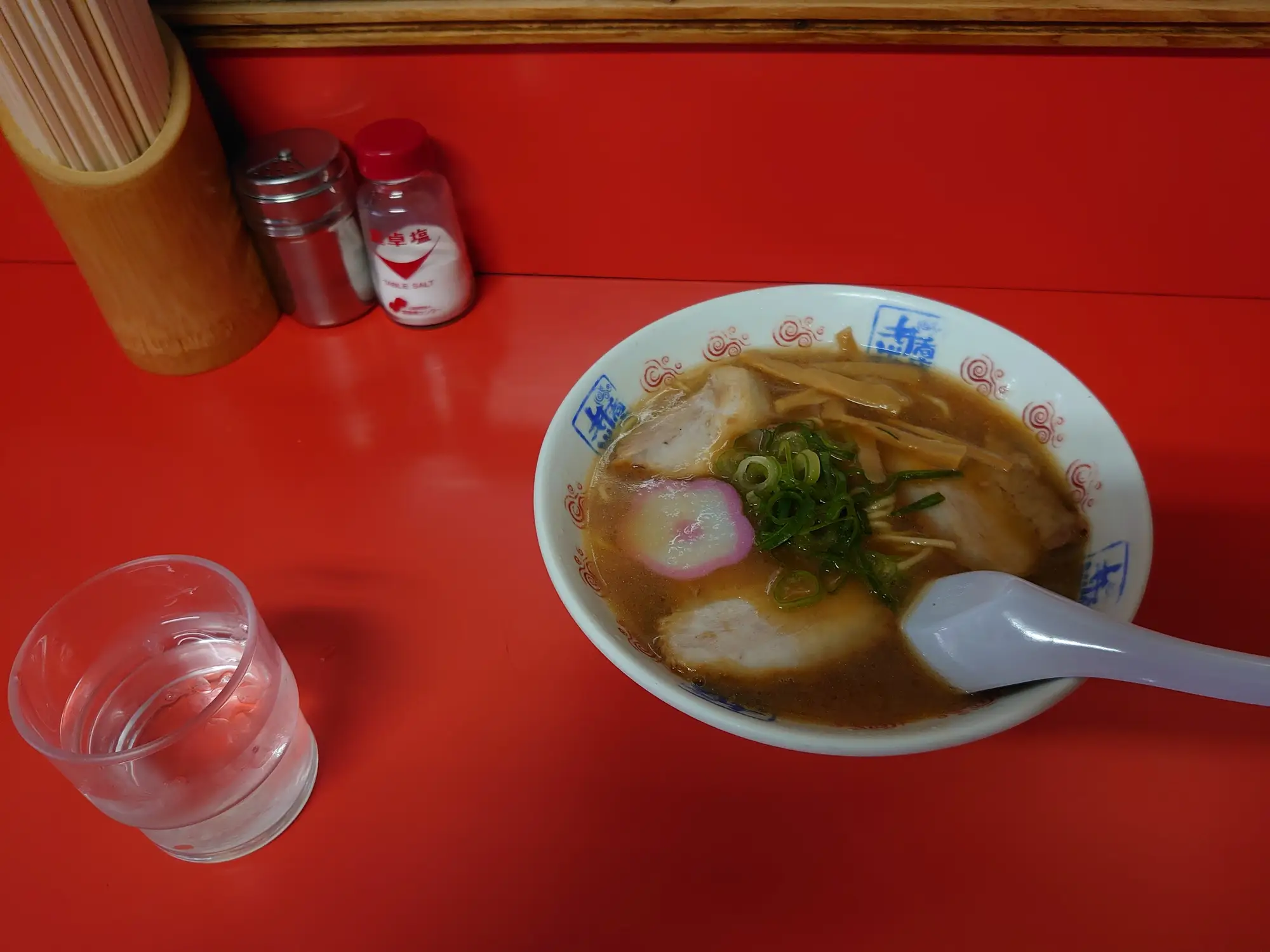
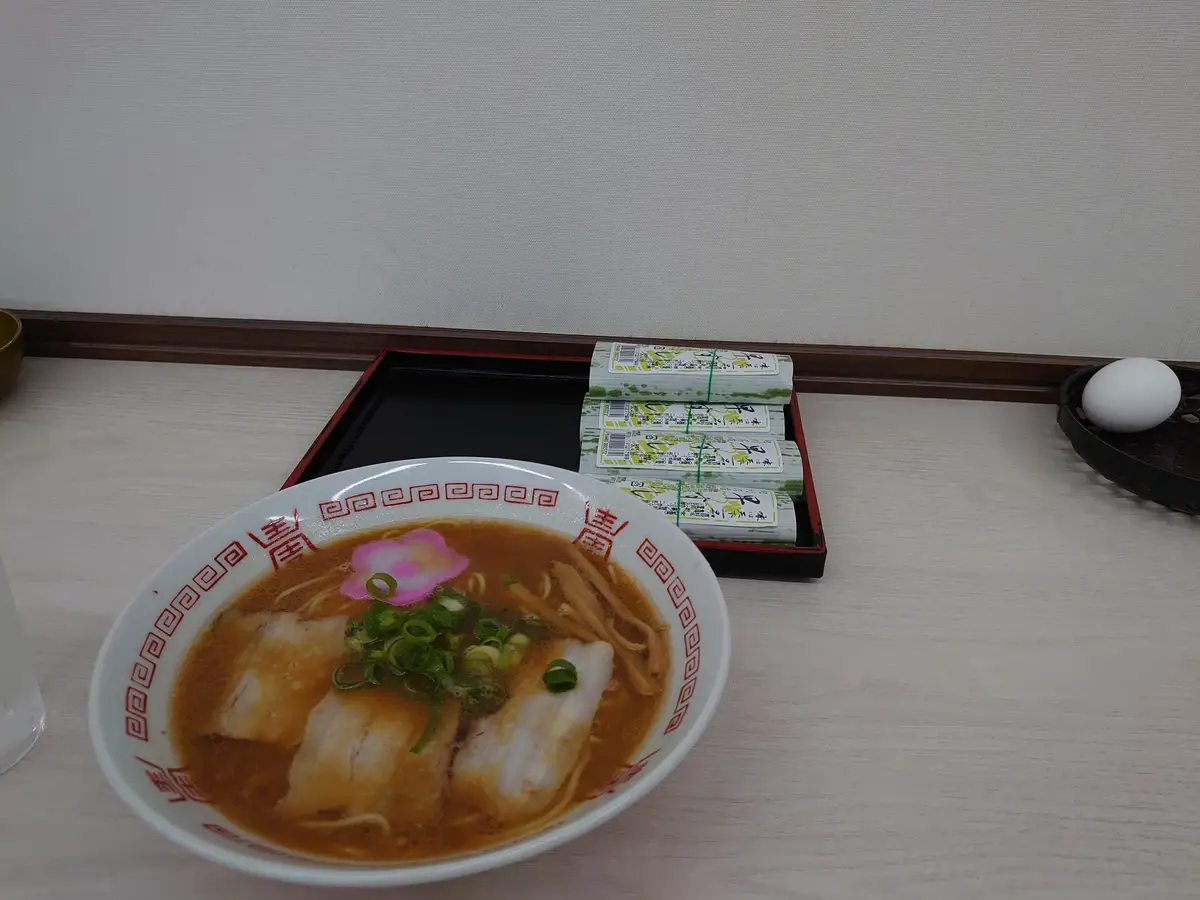
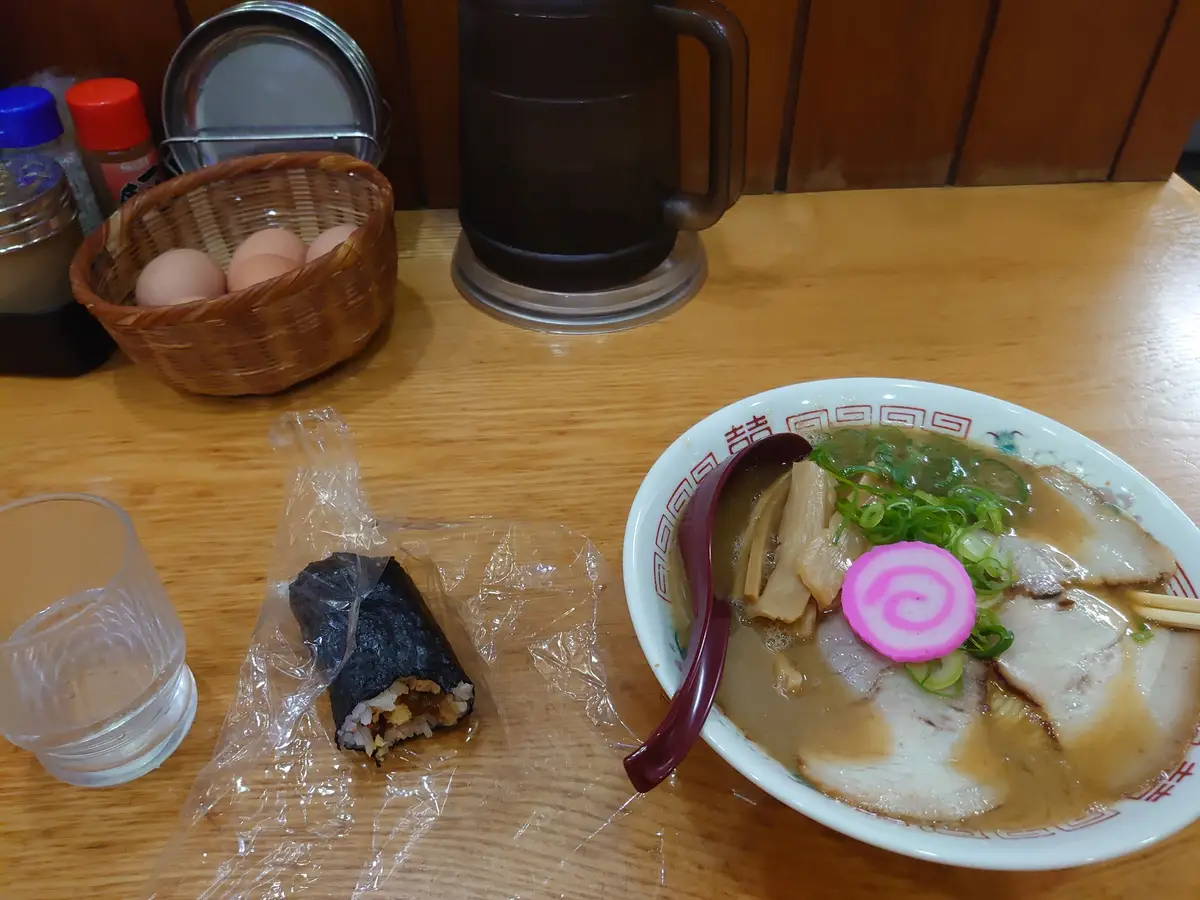
A typical bowl is modest in size. Wakayama Prefecture's tourism site notes that noodle portions tend to be about 100–120g, less than many ramen styles, with plenty of soup, because chuka soba was traditionally the bowl people ate to finish a night of drinking; the sushi and eggs on the table fill out the meal. Toppings are simple: chashu pork, menma bamboo shoots, chopped green onion, and kamaboko fish cake rather than the swirled naruto used elsewhere in Japan.
The two lineages, compared
The two-lineage idea comes from the Shin-Yokohama Ramen Museum, whose staff ate their way around Wakayama City in 1998 while planning the exhibition. Wakayama Prefecture's own guide points out that every shop uses both pork bone and soy sauce, so the line is hard to draw and "clean" or "rich" is partly a matter of taste — but it is a useful way to read a local guide.
| Shako-mae-kei (tram-depot lineage) | Ide-kei (Ide lineage) | |
|---|---|---|
| Origin | Marutaka, a stall started in 1940, and the stalls around the Shako-mae tram stop | Ide Shoten, a stall started in 1953 |
| Soup | Pork bone and soy sauce; lighter, with the soy sauce to the fore | Pork bone and soy sauce; thicker, mellow and rich |
| Shops often grouped here | Honke Arochi Marutaka, Marumiya, Maruki, Maruyama | Ide Shoten, Marusan, Shosen, Marutaya |
How to eat it
Hayazushi means "fast sushi." Wakayama also has narezushi, sushi fermented with rice for a month or more. According to Wakayama Prefecture's Premier Wakayama site, in the Arida area fermented sushi was called narezushi and sushi made quickly with vinegar was called hayazushi, and over time the name settled on vinegared mackerel sushi. Some guides, including the prefecture's ramen feature, call the version on ramen-shop tables hayanare-zushi.
Not every shop has the same side dishes. Most set out hayazushi and eggs, some also have rolled sushi or a pot of oden, and prices differ. If you are unsure, ask before you take something, and remember what you ate so you can tell the staff at the register.
The word to use is chuka soba (中華そば): that is what people in Wakayama call the dish, and what you will see on most shop signs.
Opening hours vary a great deal from shop to shop. Some close in the mid-afternoon and reopen for dinner, some take a weekday off, and a few are known for staying open late into the night. Check the current hours on the shop's own site or a map app on the day. Ide Shoten in particular often has a queue.
Wakayama ramen is easiest to fit into a day in Wakayama City: two of the best-known shops are within walking distance of JR Wakayama Station, so a bowl works as lunch between Wakayama Castle and Kimiidera, or as a late meal before an evening train. Soy sauce, which gives the soup its colour, has its own story further south in Yuasa, traditionally credited as the birthplace of Japanese soy sauce.
Four long-running shops to know
These are not rankings or recommendations — just four established shops that Wakayama Prefecture's own ramen feature lists, chosen because they show the two lineages and are easy for visitors to find. There are dozens of others.
| Shop | Lineage | Background | Area |
|---|---|---|---|
| Honke Arochi Marutaka (本家アロチ丸髙) | Shako-mae | Carries on the Marutaka stall founded in 1940; an evening shop that stays open late into the night | Tomoda-cho (Arochi area), about 10–15 min walk from JR Wakayama Station |
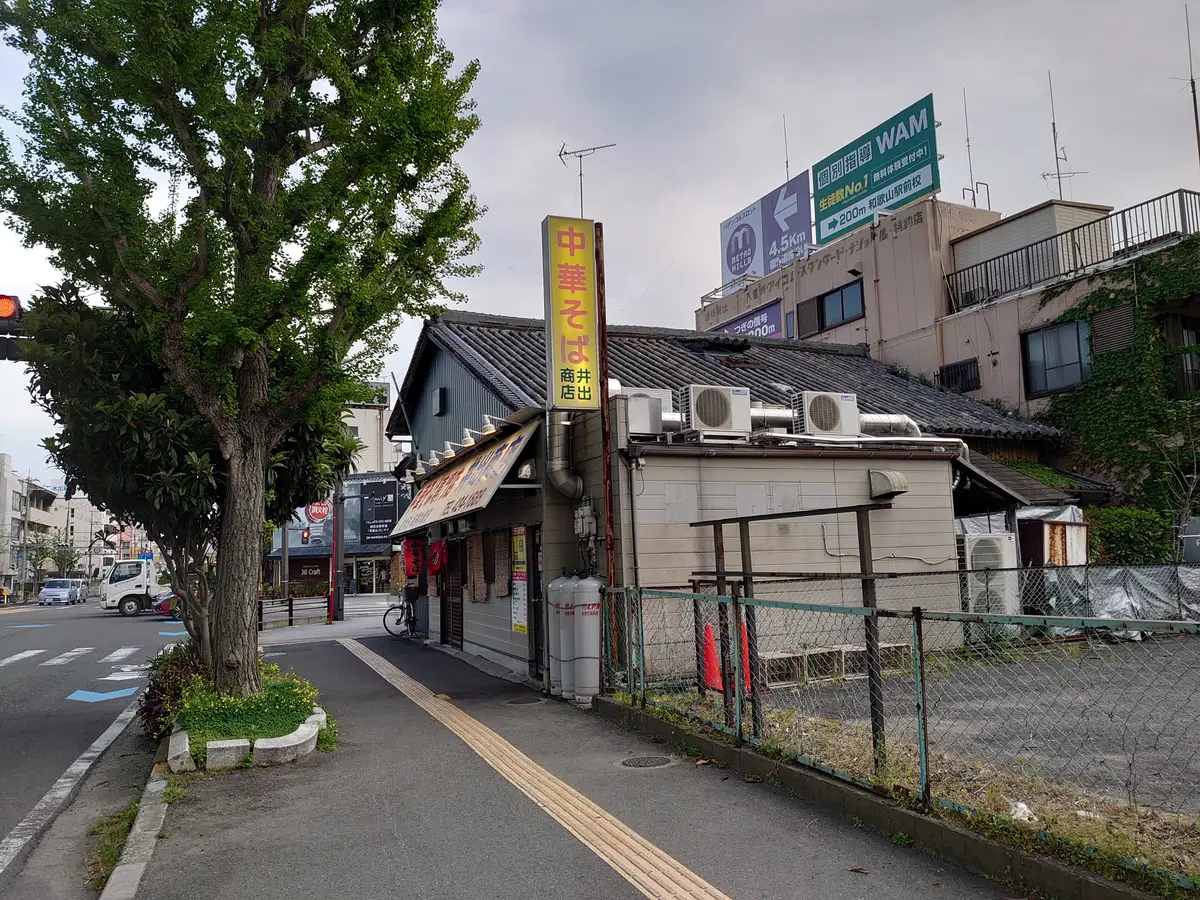
| Ide Shoten (井出商店) | Ide | Started as a street cart in 1953; the 1998 TV Champion winner | Tanaka-machi, about 10 min walk from JR Wakayama Station |
| Marumiya Honten (元車庫前 丸宮中華そば 本店) | Shako-mae | Started in 1949 as a stall in front of the tram depot | Kemi, in the south of Wakayama City near Marina City |
| Marutaya (丸田屋) | Ide | A newer chain, founded in 2002; its website has English and Chinese menus | Branches in Iwade, Wakayama City (Jiromaru, Burakuri-cho) and Shirahama |
Getting to Wakayama City for ramen
Most Wakayama ramen shops are in Wakayama City, about an hour from Osaka. From Shin-Osaka, the JR Kuroshio limited express reaches JR Wakayama Station in about an hour; from Namba, the Nankai Main Line runs to Wakayamashi Station in about an hour. From Kansai Airport, the limousine bus to JR Wakayama Station takes about 40 minutes, which makes a bowl of chuka soba a realistic first or last meal of a trip.
JR Wakayama Station is the better base for ramen: Ide Shoten and Honke Arochi Marutaka are both within walking distance of it. For shops elsewhere in the city, use a local bus or taxi. See our Wakayama City guide for sights to pair with lunch, and getting around Wakayama for rail passes and routes further south.
Primary sources
- Wakayama Prefecture official tourism site — Wakayama ramen: history, styles and shops
- Shin-Yokohama Ramen Museum — Wakayama ramen
- Shin-Yokohama Ramen Museum — Ide Shoten
- Premier Wakayama (Wakayama Prefecture) — Hayazushi
- Wakayama City Tourism Association — Honke Arochi Marutaka
- News Wakayama — Marumiya Honten
- Marutaya — official site (shops)
Last updated: