Wakayama · Japan
Yunomine Onsen
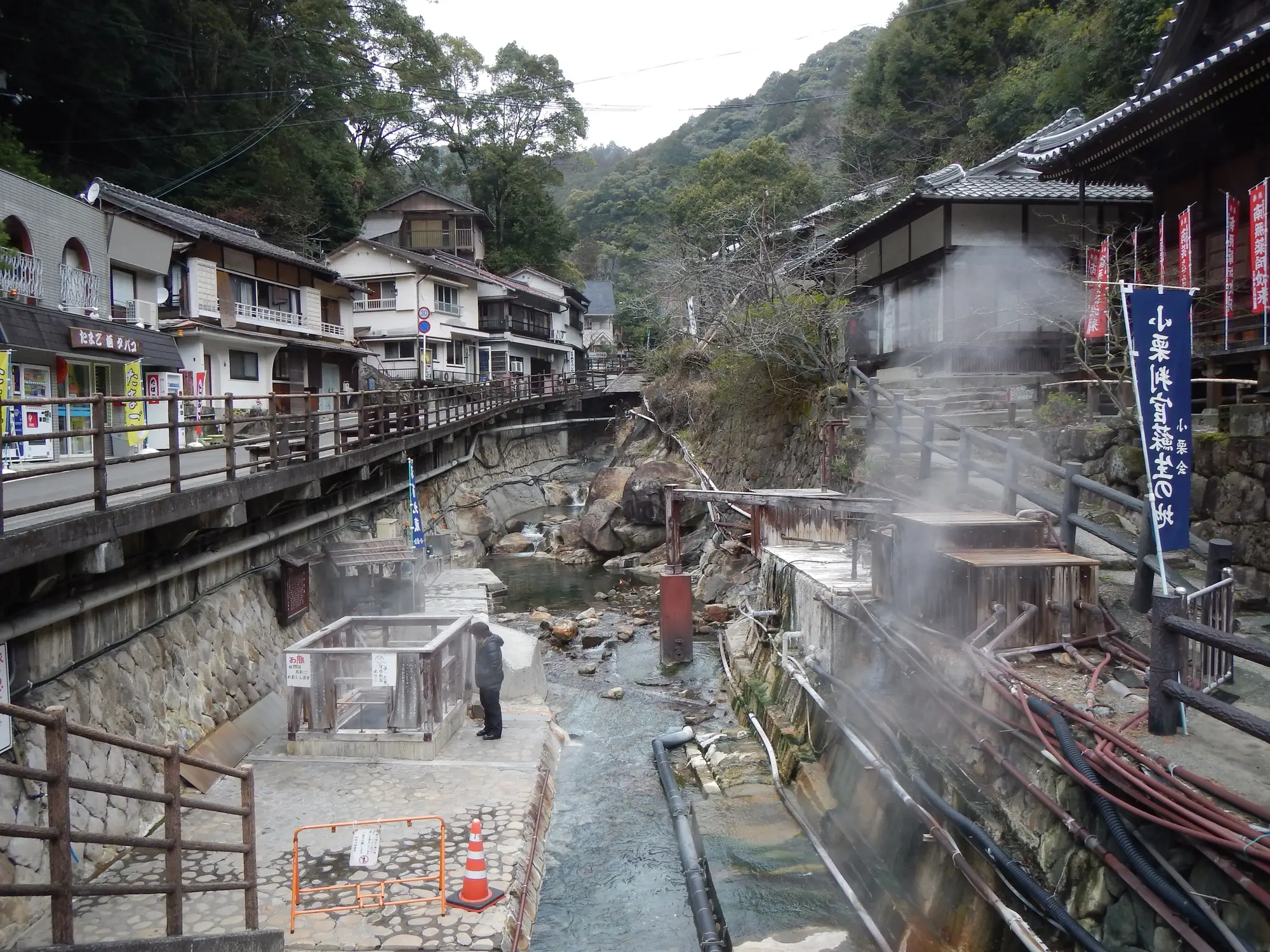
A one-street hot spring village in a steaming gorge a few kilometres from Kumano Hongu Taisha, where medieval pilgrims washed before meeting the gods — and where you can still bathe in the tiny riverside hut that is part of a UNESCO World Heritage site.
A pilgrims' bath for more than a thousand years
Yunomine Onsen's own story is that the spring was discovered around the 4th century by Oato no Sukune, a regional governor of Kumano, and the Kumano Hongu Tourism Association counts its history at about 1,800 years. Those dates come from tradition rather than written records, but the village was well established by the time of the great Kumano pilgrimages, when retired emperors, aristocrats and later commoners walked to Kumano from Kyoto.
For those pilgrims, Yunomine Onsen was a place of yugori: bathing in hot spring water to purify body and mind before entering the sacred ground of Kumano Hongu Taisha, over the mountain to the east. The link survives in the shrine's calendar. On 13 April, the first day of Hongu's spring festival, participants purify themselves at Yunomine and then walk the old Dainichi-goe trail over the pass to the shrine, fathers carrying their young sons on their shoulders.
The name is said to come from the village temple, Toko-ji. Its principal image, a Yakushi (healing Buddha), is said to have formed naturally from mineral deposits around the original spring, and hot water once flowed from the statue's chest (mune) — so the spring was called Yu-no-mune, "hot water from the chest", which later became Yunomine. Toko-ji stands above the stream in the centre of the village, and the public bathhouse is right beside it.
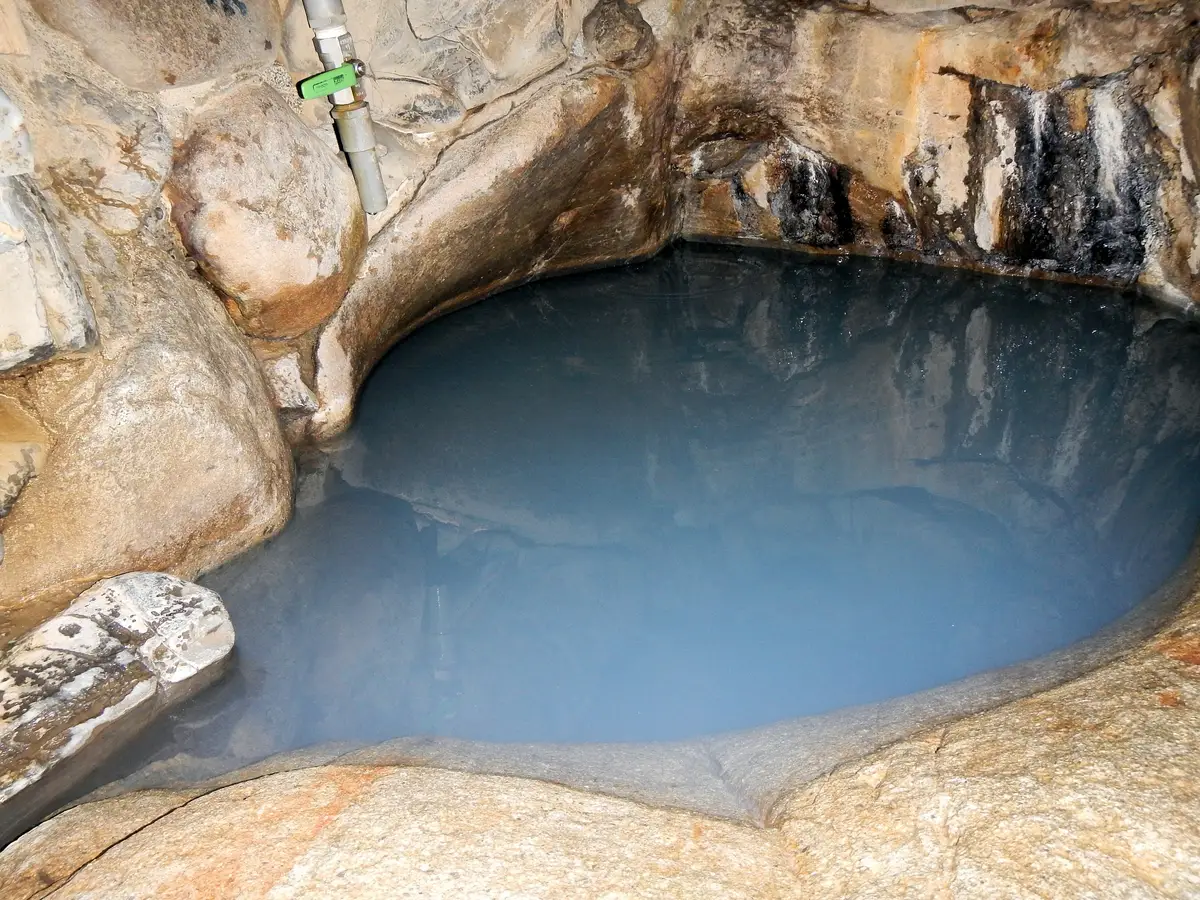
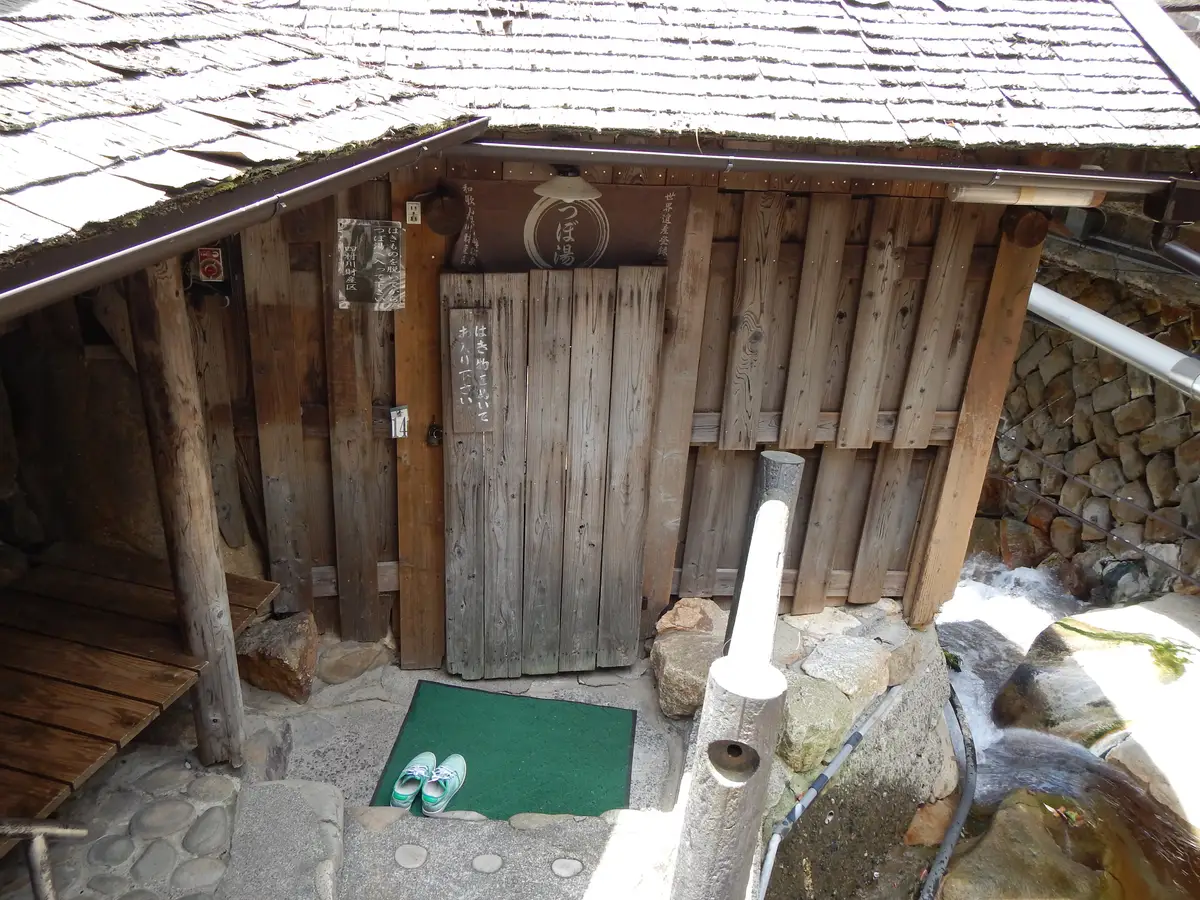
Tsuboyu also carries a famous legend. In the medieval tale of Oguri Hangan and Princess Terute, retold in puppet theatre and kabuki, the nobleman Oguri is poisoned, returns from the underworld in a ruined body, and is hauled on a cart all the way to Yunomine, where 49 days of bathing restore him. Tsuboyu is said to be the bath where he recovered, which is why the hut's sign reads "Oguri Hangan's healing bath" and the local tourism association promotes Tsuboyu as a bath of rebirth. Two other spots in the village, the Chikara-ishi stone and the Kuruma-zuka mound, are tied to the same story.
Baths at Yunomine: hours and fees
Tsuboyu and the public bathhouse are run together, and tickets for both are sold at the bathhouse counter beside Toko-ji. A Tsuboyu ticket also covers one bath in either the ordinary public bath or the kusuri-yu.
| Bath | Hours | Adult | Child (under 12) |
|---|---|---|---|
| Tsuboyu (private, 30 minutes per group) | 6:00–21:00 (last entry 20:30) | ¥800 | ¥400 |
| Public bath (ippan-yu) | 6:00–21:00 (last entry 20:30) | ¥400 | ¥200 |
| Kusuri-yu ("medicine bath") | 6:00–21:00 (last entry 20:30) | ¥600 | ¥300 |
| Family bath (kazoku-yu) | 6:00–21:00 (last entry 20:30) | ¥700 | ¥300 |
| Yuzutsu egg-boiling basin | 6:00–21:00 | Free | Free |
Before you go
Tsuboyu is a small natural rock pool that holds about two people, inside a wooden hut beside the stream. The spring comes out of the ground at about 92°C and is classed as a sulphur-bearing sodium hydrogen carbonate spring. The water in Tsuboyu is said to change colour seven times a day; that is a long-standing local saying rather than a measured fact, so treat it as part of the legend.
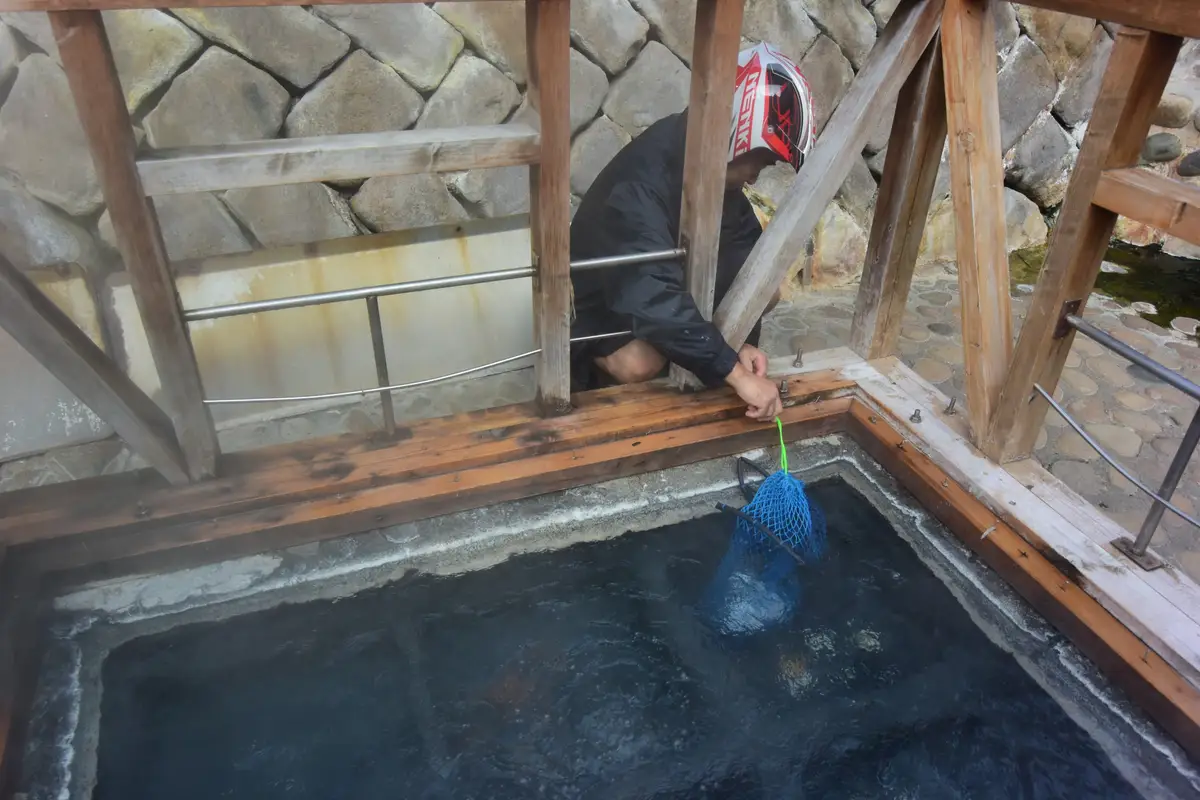
The yuzutsu is a stone basin of 90°C spring water in the stream bed in the middle of the village, free for anyone to use from 6:00 to 21:00. Buy raw eggs or vegetables at one of the souvenir shops along the street, lower them into the water and wait. It is one of the simplest pleasures in Kumano, and a good snack after the walk over from Hongu.
You can also take home the water: the bathhouse sells spring water from a tap at ¥100 for 10 litres.
Yunomine is a very small place: one street, a temple, the bathhouse, a few souvenir shops, and a handful of ryokan and minshuku (family-run inns) many of which cook with the spring water. It is quiet in the evening, so plan dinner at your inn.
To stay the night, a Booking.com search for Yunomine Onsen shows the inns that list there, such as Yunominesou and Ryokan Adumaya. Some of the village's small inns are booked mainly through KUMANO TRAVEL, the Tanabe City Kumano Tourism Bureau's own reservation service, which is also where most Kumano Kodo walkers book their rooms. Kawayu and Watarase onsen, a short bus ride away, are the other nearby options.
Yunomine is the obvious base for Kumano Hongu Taisha: stay here, walk over the Dainichi-goe trail to the shrine in the morning, and take the bus back. If you are walking the Kumano Kodo Nakahechi, Yunomine is one of the places to stay near the end of the route.
Getting between Kumano Hongu Taisha and Yunomine Onsen
Yunomine and Hongu are on opposite sides of Mt. Dainichi. The road goes around it; the old pilgrimage trail goes over it.
| Option | Time | Notes |
|---|---|---|
| Local bus | About 15–20 min | Hongu-Taisha-mae to the Yunomine Onsen stop, in the middle of the village. Buses are infrequent, so check the timetable first. |
| Dainichi-goe trail on foot | About 1.5–2 hours, about 3.5 km | A short but steep forest trail over the pass, about 250 m of climbing, past Tsukimigaoka-jinja shrine and a Jizo carved in rock. Ends near Tsuboyu. Wear proper shoes; roots and rocks are slippery when wet. |
| Taxi | Short drive | Kumano Daiichi Kotsu has a taxi stand near the Hongu-Taisha-mae bus stop; its office is open 8:30–16:00 (tel. 0735-22-6311). |
Getting to Yunomine Onsen
There is no train station near Yunomine; the nearest JR stations are Kii-Tanabe on the west coast and Shingu on the east coast, and you continue by bus. From Osaka, the JR Kuroshio limited express reaches Kii-Tanabe in about 2 hours. From Kii-Tanabe Station, Ryujin buses on the Kumano Hongu line reach Yunomine Onsen in roughly 1 hour 40 minutes; if your bus ends at Hongu-Taisha-mae, change there for the short ride to Yunomine. From JR Shingu Station, the bus takes about 1 hour 15 minutes.
Buses are few, so check the current timetable on the Tanabe City Kumano Tourism Bureau site before you set off. If you are driving, there is free parking near the bathhouse. Because of the long journey, most visitors pair Yunomine with Kumano Hongu Taisha and stay at least one night in the area rather than coming as a day trip from Osaka.
Primary sources
- Kumano Hongu Tourism Association — Yunomine Onsen public bath and Tsuboyu
- Kumano Hongu Tourism Association — Yunomine Onsen
- Tanabe City Kumano Tourism Bureau — Yunomine Onsen
- Tanabe City Kumano Tourism Bureau — Dainichi-goe
- Wakayama Prefecture official tourism site — Tsuboyu
- Wakayama Rekishi Monogatari — the Oguri Hangan legend at Yunomine
- UNESCO — Sacred Sites and Pilgrimage Routes in the Kii Mountain Range
Last updated: