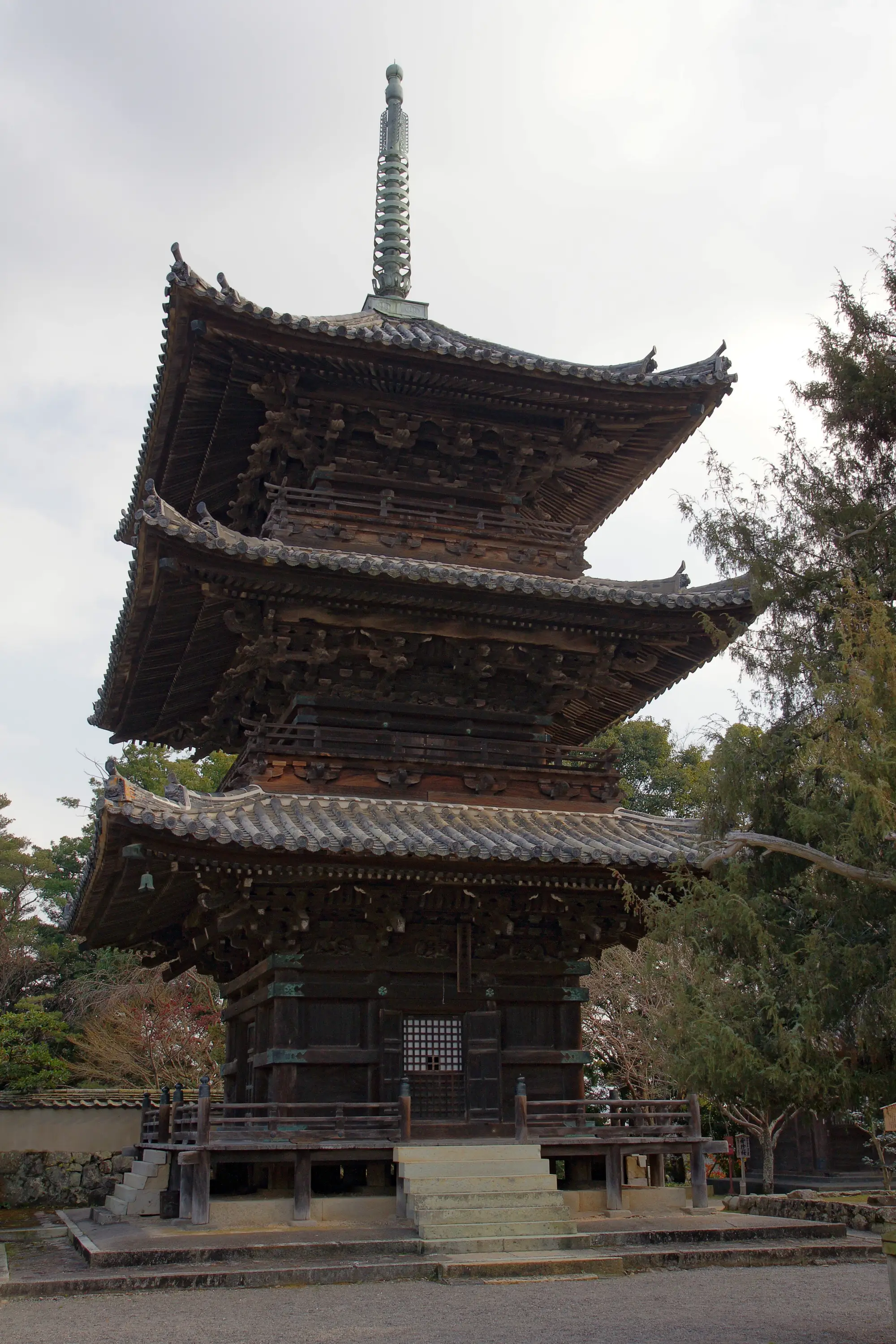
Wakayama · Japan
Dojoji Temple
Traditionally the oldest temple in Wakayama, founded in 701 — and the setting for a story of love, betrayal and a woman who became a serpent that has been retold on stage for over 600 years.
A love story, a bell, and 600 years on stage
The story goes that the monk Anchin, travelling on a Kumano pilgrimage, was taken in for the night by a young woman named Kiyohime, who fell in love with him. He promised to visit her again on his way home but broke his word and fled. Kiyohime pursued him, and in her fury transformed into a giant serpent while crossing the Hidaka River. She found him hiding at Dojoji Temple under its bronze bell, coiled around it, and burned Anchin to death with the heat of her rage before drowning herself.
The bell itself has its own second legend. Recast in 1359, it is said that at its consecration ceremony a mysterious dancer appeared, danced beside it, and vanished — after which the bell was considered cursed and left abandoned in a nearby forest for over 200 years. During Toyotomi Hideyoshi's 1585 campaign against the temples of Kii, a warlord excavated the bell and carried it off to Kyoto, where it was donated to Myoman-ji temple and remains today. Dojoji itself has had no bell or belfry since — only the site where one once stood — one of the temple's "Seven Mysteries."
The legend inspired the Noh play Dojoji, in which a dancer sneaks into a bell-dedication ceremony and is revealed as the vengeful serpent-spirit, and its Kabuki dance descendant Musume Dojoji — still two of the most demanding and frequently performed pieces in both traditions. The temple's own illustrated legend scroll, an Important Cultural Property believed to date from the late Muromachi period (around the 16th century), is the version used in the temple's own retelling of the story today.
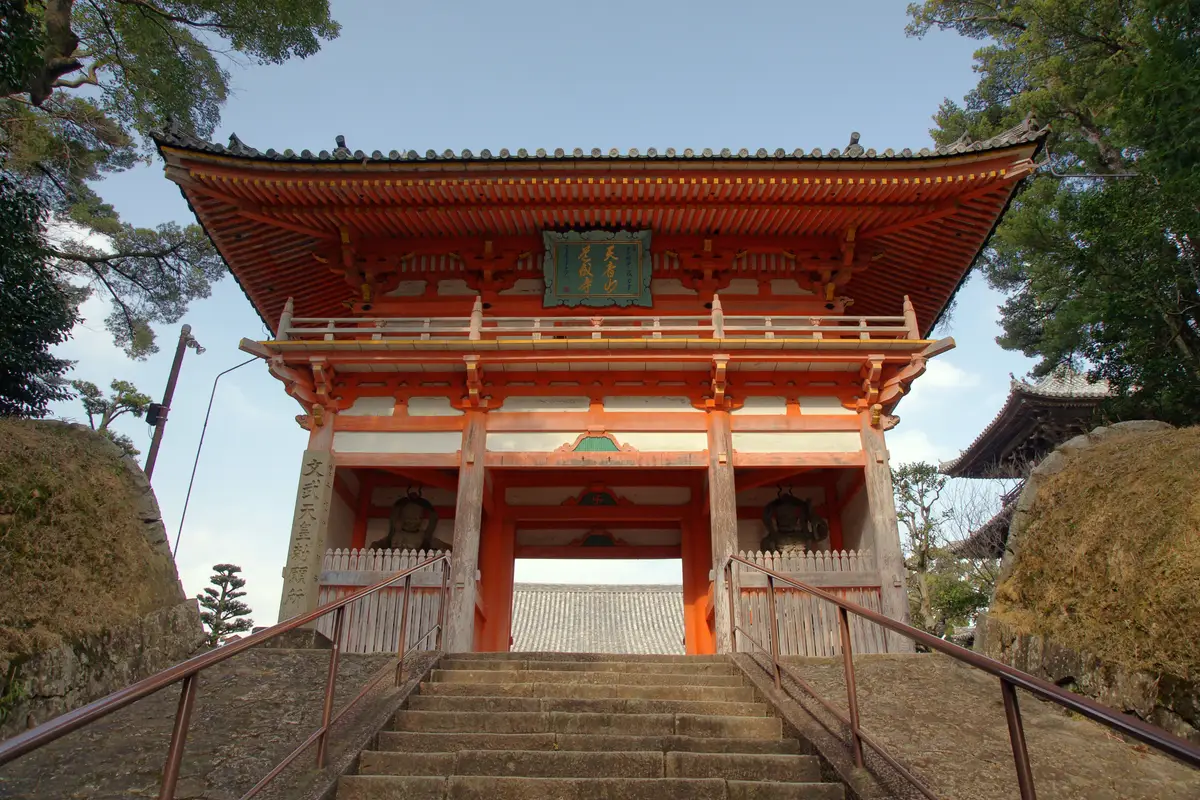
Visiting: hours and admission
A single ticket covers the temple's treasure hall, the legend hall, and the daily picture-story telling of the Anchin-Kiyohime story.
| What | Hours | Admission |
|---|---|---|
| Temple grounds, treasure hall & e-toki telling | 9:00–17:00 daily, no closed days (last e-toki session by 16:00) | ¥700 adult / ¥350 elementary school |
| Parking | Same hours | ¥500 per car |
Before you go
The treasure hall holds a standing Thousand-Armed Kannon statue from the early Heian period, along with its attendant Bosatsu figures, all designated National Treasures — worth the visit on its own even without the legend.
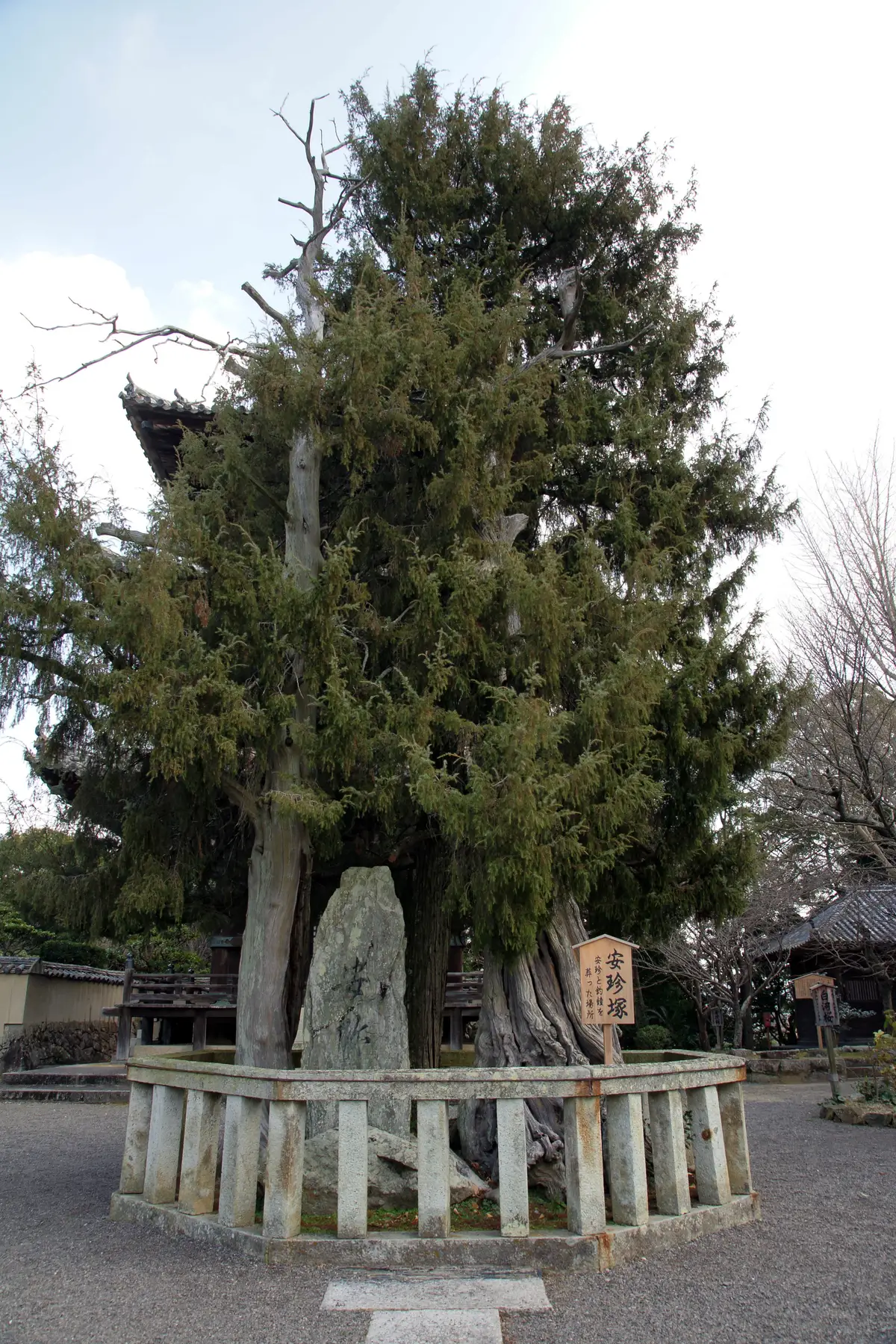
Look for Anchin-zuka on the grounds, a stone memorial associated with the monk at the centre of the legend, on your way in.
There is no bell hanging at Dojoji today at all — the original was taken to Kyoto's Myoman-ji temple in the 16th century and never returned, and the temple has had no replacement since. This is one of the temple's "Seven Mysteries" (nana fushigi); another is the 62-step stone stairway up to the Niomon gate itself, built as a trapezoid — narrower at the bottom, wider at the top — so that it is said to feel equally easy climbing up or down. A third involves a hidden Thousand-Armed Kannon statue in the Main Hall, unveiled to the public for only 33 days every 33 years — the last time was 2005, so the next is due in 2038.
Dojoji is in the same town, Hidakagawa, as Warai Matsuri, the laughing festival at Niu Shrine — the two sit near each other geographically but come from unrelated legends, so treat a visit to both as a convenient pairing rather than a themed one.
Getting to Dojoji Temple from Osaka
Take the JR Kuroshio limited express from Shin-Osaka, Osaka, or Tennoji to Gobo Station, then one stop south on a local train on the JR Kisei Line to Dojoji Station — a short walk from there to the temple.
Gobo sits on the same line as Shirahama and Kii-Tanabe, making Dojoji an easy detour on the way south. Allow about 30–45 minutes for a visit, including one e-toki session; groups of 20 or more pay a reduced ¥600 per adult, and accessible parking is available at no extra charge.