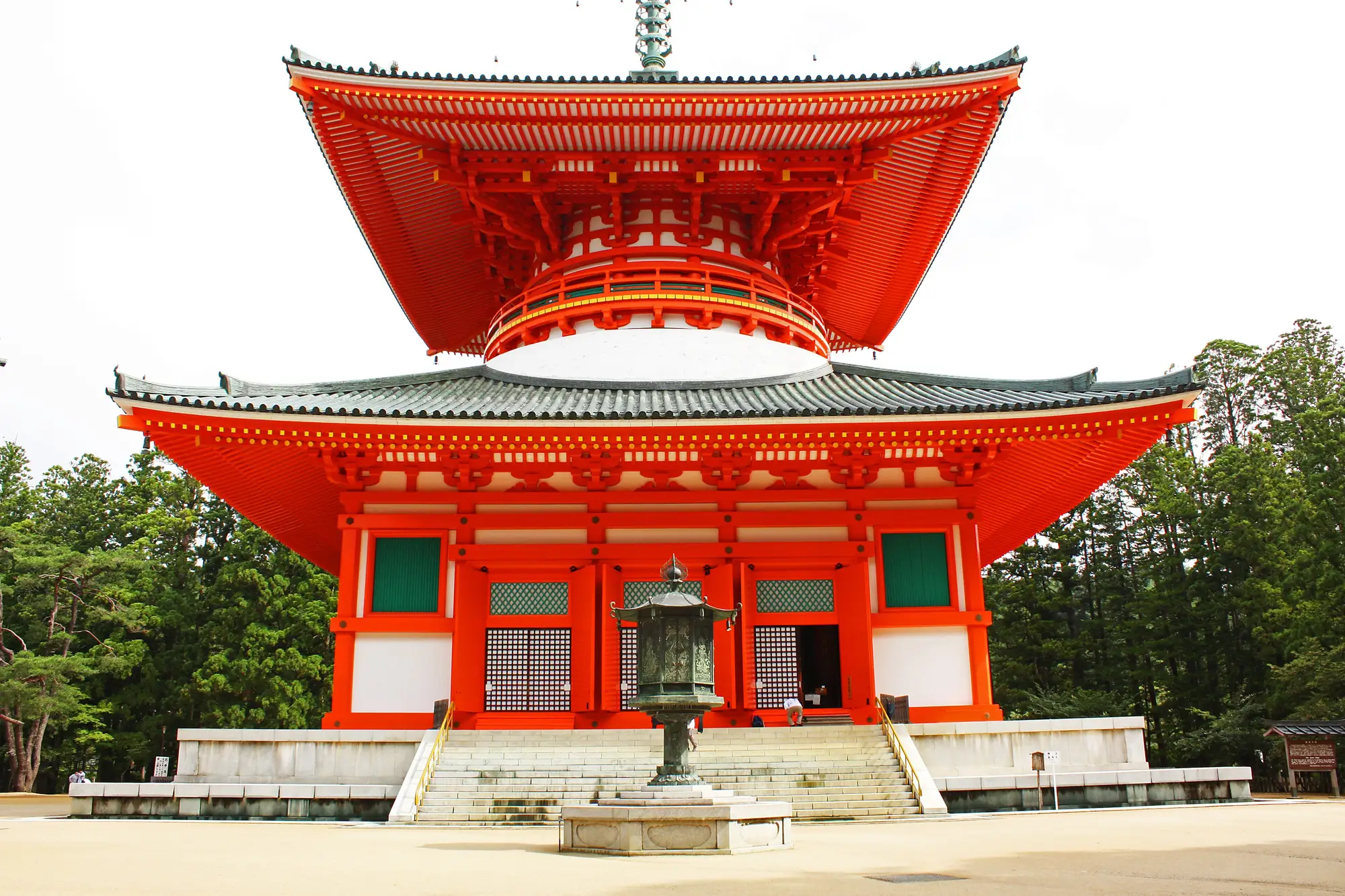
Wakayama · Japan
Where — and What — Is Wakayama?
A prefecture most first-time visitors to Japan have never heard of, sitting on a peninsula that shaped the country's religious life for a thousand years and once supplied it with a shogun.
Wakayama on the map
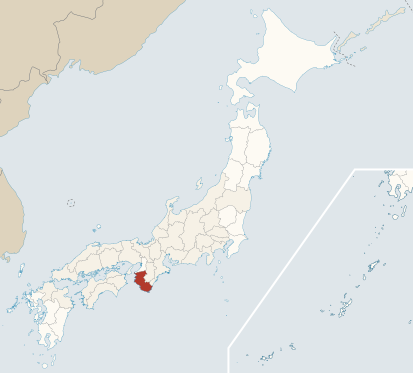
Wakayama Prefecture covers 4,724 square kilometres of the Kii Peninsula's southern and western reaches, bordered by Osaka to the north and Nara and Mie to the northeast. It is one of the more mountainous prefectures in Japan — roughly 80% forest — which is precisely why it developed as a place of religious retreat rather than a population centre.
Most visitors reach it from Osaka (about an hour by train to Wakayama City) or as a longer detour from Kyoto (roughly two hours). It rarely appears on a first-time Japan itinerary built around Tokyo–Kyoto–Osaka, which is exactly why it has stayed comparatively undiscovered by English-speaking travellers.
A thousand years, briefly
The history that actually shows up when you visit — the temples, the castle, the old pilgrimage roads — compressed into the moments that mattered.
| Period | What happened | What you can still see |
|---|---|---|
| Heian era (794–1185) | Retired emperors began making the Kumano pilgrimage in 907; by the late Heian period it was so popular commoners called the crowds on the trail the "ant procession to Kumano." Kūkai founded Koyasan in 816 as the training monastery for Shingon Buddhism. | The Kumano Kodo trails and the Danjo Garan temple complex on Koyasan |
| Sengoku era (1467–1615) | Two heavily armed warrior groups, the Saika and the Negoro monk-warriors, controlled much of the region using matchlock guns — until Toyotomi Hideyoshi crushed both in his 1585 conquest of Kii, burning Negoroji in the process. | The Daito pagoda at Negoroji, which survived the fire and still shows musket-ball damage |
| Edo era (1603–1868) | In 1619, Tokugawa Ieyasu's tenth son Yorinobu became lord of a 555,000-koku domain based at Wakayama Castle — the Kishu Tokugawa, one of the Gosanke (three senior Tokugawa branches). In 1716, Kishu's own Tokugawa Yoshimune became the 8th shogun and launched the Kyōhō Reforms. | Wakayama Castle, rebuilt after wartime bombing destroyed the original keep |
| Meiji era (1868–1912) | The 1871 abolition of the domains turned the Kishu domain into Wakayama Prefecture in roughly its current borders. | The prefecture's modern administrative shape |
Fun facts worth knowing
Taiji, on the southeast coast, has organised whaling dating to at least 1606, and still markets itself as a "whale town" with 400 years of history.
Adventure World in Shirahama has run a joint giant panda breeding program with China's Chengdu base since 1994, successfully breeding 17 cubs by 2018 — more than any facility outside mainland China.
Where to see this history today
Koyasan carries the 816 founding story most directly — Kūkai's original monastery is still a working religious community, not a museum piece.
Wakayama City is where the Edo-period Kishu Tokugawa story is most visible, centred on the rebuilt castle.
Primary sources
- Kii Peninsula — Wikipedia
- Tokugawa Yorinobu — Wikipedia
- Siege of Negoro-ji — Wikipedia
- Minabe-Tanabe ume system — GIAHS
Last updated: